Posts Tagged With: independence

Turkey Drumsticks

American Entree

­

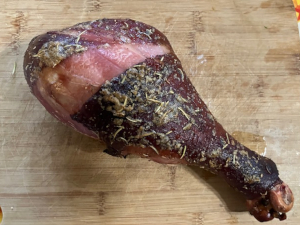
TURKEY DRUMSTICKS

­
INGREDIENTS­
­
2¼ pounds* turkey drumstick
¼ cup butter
⅜ teaspoon pepper
½ teaspoon garlic powder
½ teaspoon rosemary
½ teaspoon sage
1 teaspoon sea salt or salt
no-stick spray
­
* = The weight of a drumstick varies wildly, from ½ pound to 2¼ pounds. The average weight for a turkey drumstick is ¾ pound.
­
SPECIAL UTENSILS
­
no-stick spray
meat thermometer
­
Serves 3. Takes 1 hour 45 minutes.
­
PREPARATION
­
Preheat oven to 360 degrees. Use paper towels to pat turkey dry. Melt butter in small pot, using low-medium heat. Add pepper, garlic powder, rosemary, sage, and sea salt. Mix with fork or whisk until well blended. Brush all of the melted butter over the turkey legs. Spray baking pan with no-stick spray. Add turkey legs to baking pan. Roast turkey for 1 hour 30 minutes at 360 degrees or until internal temperature reaches 175 degrees.
­
TIDBITS
­
1) Late 18th century The United States of America just buzzed with music. And why not? It had just gained its independence by defeating Britain, the greatest empire in the world. At first things looked bleak for the former Thirteen Colonies. British armies would win battle after battle with planned attacks. They would coordinate their assaults by rapping out orders in Picton code on their drums.
­
2) Unfortunately, the Continental Army couldn’t send messages via drums, for Britain had hoarded all the drumsticks. Then just in time for the Battle of Saratoga, Private Carl La Fong observed, “We have plenty of wild turkeys. Why not use turkey drumsticks on our drums?” General Washington ordered this to be done. The Continentals now tapped out orders to a string of victories. Britain gave up fighting and granted America its independence in 1783. As General Cornwallis wrote, “We couldn’t defeat them once they got the turkey drumstick.” So every time we dine on turkey drumsticks or listen to a drum corps, we’re honoring the soldiers who won us our independence.
­
­

– Paul De Lancey, The Comic Chef, Ph.D.

My cookbook, Following Good Food Around the World, with its 180 wonderful recipes, my newest novel, Do Lutheran Hunks Eat Mushrooms, a hilarious apocalyptic thriller, and all my other books, are available on amazon.com.
Categories: Uncategorized | Tags: , , , , , , , , , , , , , , | 1 Comment

Flags of the World – Triangles, Part Five

In Part One, we saw how geometry haters tyrannized lovers of triangles. We also discovered how geometry made better living possible. In Part Two, we learned of the terrible rivalry between circles and triangles. When, oh when, will trianglistas ever bask in the sunshine that is peace and security? In Part Four, we uncovered the unintended side benefits that accrue to lands that incorporate triangles into its flag. Here in Part Five, we learn about dynasties, golf, and weight gain.

 And now, the:

ROLL CALL OF FREEDOM

17. Jordan

Each stripe symbolizes a significant dynasty. The black stripe represents the domino-loving Abass dynasty from Baghdad. The middle white stripe is a sign of the Umayyads from Damascus and represent confectioners’ sugar. The best powdered doughnuts really can be found in Damascus. The green stripe refers to the dynasty of the Moroccan Fatimids and symbolized Morocco’s putting greens. The country may be mostly arrid, but the ruling elite really loves golf. The red wedge  stands for the Jordanian Hashim dynasty. and recalls a decadades-ago event when the dynasitc laundry woman put red scarves in the clothes washer. The red ran and all the leaders’ robes turned red. The elite made a virtue out of necessity and adopted red as their dynasty’s color. The white star is white.

­


­
18. Marshall Islands
­
The Marshall Islands is home to one of the densest concentrations of trianglistas in the world. This devotion to the trianglism –Yes, that is a now a legitimate word–way of life shows everywhere, including in sandwich shops. The levels of government bureacracy remain riddled with wisely governing trianglistas. Such devotion to the charming triangle shows up in the land’s flag which has seven! triangles. Can you find them all? (Three of the triangles are formed from two-or-three individual triangles.)
The orangle color of, well, the orangle triangle stands for the nation’s wealth. The white triangle represents hope. Well, why not? The two blue triangles recall the Pacific Ocean which laps the shores of this island nation. The differing sizes of the triangles represent the land’s ongoing commitment to diversity. The thick and thin sizes evoke humanity’s ever-present struggle from being overweight and the commitment to a leaner, healthier lifestyle. The pointy star is not a ninja death star. Rather it stands for islands’ administrative districts, Christian traditon, and the nation’s four largest cities. A busy star, you bet.
­


­

19.  Mozambique

Arlo Guthrie’s great song “Mozambique” came about when a friend decided to make as many rhymes as they could with Mozambique. Again, I feel like point that the song “Mozambique” came after the nation was named and not vice versa.

Portugal’s flag has no triangles. Mozambique was a Portugese colony. The triangle-loving Mozambicans wanted independence and the right to determine the geometric shapes of the land. The small red refers to narrow margin of victory in their struggle for independence. The red color represents the bloody struggle to control their own destiny or red meat. (Portugal and Mozambique share a lot of culinary traditions.) The Kalashikov represents the armed conflict. Pow! Pow!

The color green harkens to the land’s fertile fields and to the cloth felt found on pool tables. If you visit Mozambique, take your cue stick. The book shows how much the Mozabicans love my novels and cookbooks. Thank you, Mozambique. The hoe depicts the imprortance of farming. Yellow stands for mineral wealth. The thin white arose from a shortage of green, black, and gold dyes.

­


­

20. Namibia

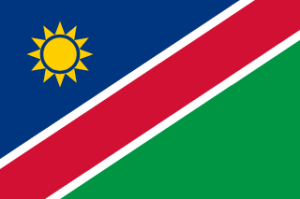
Namibia is proud of the two triangles in its flag, as what country would not? The red stripe stands for the blood that’s pumped through our body. By extension, the stripe also represents the people teeming and flowing through this happy land. The green symbolizes the country’s vibrant parsley industry. Blue means that the sky above Namibia is blue. The flag also sports the yellow sun, which can be seen nearly every day. White stands for the country’s few clouds.


­


– Paul De Lancey, The Comic Chef, Ph.D.

My cookbook, Following Good Food Around the World, with its 180 wonderful recipes, my newest novel, Do Lutheran Hunks Eat Mushrooms, a hilarious apocalyptic thriller, and all my other books, are available on amazon.com.
Categories: flags, international | Tags: , , , , , , , , , , , , , , | Leave a comment

Flags of the World – Triangles, Part Four

 And now, the:

ROLL CALL OF FREEDOM

13. Equatorial Guinea

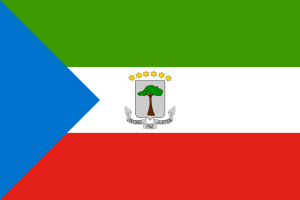
Here, blue stands for the bountiful ocean that laps at Equatorial Guinea’s enchanting beaches. Green stands for the nation’s green plants that grow through the miracle of photosyntheis. White represents the white blood cells that defend the citizens from nasty bacteria. Red stands for the nation’s mythical red bunnies that will protect Equatorial Guinea in times of great need. Note the small blue triangle to the left. This represents (I’m really need to look up synonyms in my Thesaurus for “represents.”) the tenuous hold the trianglistas have on this troubled land. Please send thoughts and prayers to Equatorial Guinea.

The flag’s coat of arms indicates this nation’s committment to unity, peace, and justice. The green tree in the coat of arms symbolizes green trees. These trees provide shade for picknickers.  The five stars indicates the average grade-level of literacy. This is fine, as everybit of linguistic knowledge after that is only needed for specialized knowledge such as econometrics or archeology.


14. Eritrea

Eritrea fought a long war for independence. This flag clearly represents the aspirations of the trianglista revolutionaries. Eritrea’s flag contains not one, not two, but three triangles. (And three is a special number in many cultures.) The red triangles refers to tomatoes, yum, and to the land’s armed struggles for self rule and independence. The laurel wreath harkens to the one in the United Nations flag. (Note that their copyright infringement does not apply to flags.) The weird thing in the middle of the wreath symbolizes the claw prints of the reclusive mok-mok bird.

The green triangle stands for green things. The blue triangle indicates blue skies and blue waters. It’s important to note that these two triangles are orthogonal. Together with the red isoceles triangle this flag manages to incorporate just triangles into its rectangular flag. That last big is a bummer, but still an “A” for effort.


15.  Guyana

This flag was chosen through public competition. Cool. More countries should try this. The color white symbolizes the nation’s waters. Aren’t oceans and lakes blue? Perhaps white is a nod to white-water rafting.  Red stands for sacrifice, just like the red-shirted crews in Star Trek(tm). Black means the nation’s perservance in building a brighter future. Yellow symbolizes Guyana’s mineral deposits and egg yolks. (I need my egg yolks cooked through because of allergies.) Green refers to the land’s abundant vegetation.

Together, the yellow triangle and the white trim harken to the emblem sewn onto Star Trek uniforms. This symbolizes the nation’s desire to go boldly into the future. Best wishes, Guyana. Please note that this happy land starts with one triangle ends with two. This is as it should be.


16. Jamaica

Jamaica is the home of excellent reggae music and fantastic jerk chicken. I wish these two things could have made their way into this flag, but I suppose that would have been hard to do. Anyway, the Pan-African colors of black, green and yellow were placed around the cross of Saint Andrew. The two black triangles stand for hardships that will be overcome. Yellow symbolizes the Jamaican sun.” The two green triangles refer to this land’s beautiful greenery. And well done, Jamaica, for putting four triangles in your flag. You rock.


­


– Paul De Lancey, The Comic Chef, Ph.D.

My cookbook, Following Good Food Around the World, with its 180 wonderful recipes, my newest novel, Do Lutheran Hunks Eat Mushrooms, a hilarious apocalyptic thriller, and all my other books, are available on amazon.com.

Categories: Uncategorized | Tags: , , , , , , , , , , , , , , | Leave a comment

Paul the Liberator

Independence Fireworks

By far, the greatest number of nations achieving independence has occurred in my lifetime. It’s true. You can look it up. I am, of course, rather humbled by this knowledge. I don’t recall having much direct influence on this march to freedom but nevertheless, it has happened concurrently with my existence. I can only surmise that my life has always been a  beacon of hope to people in downtrodden lands.

I see a Nobel Peace Prize in the near future.

For the record, countries achieving independence since my birth are:

Togo
Guinea
Madagascar
Mali
Senegal
Ivory Coast
Niger
Cameroon
Togo
Madagascar
Democratic Republic of Congo
Somalia
Benin
Burkina Faso
Chad
Central African Republic
Republic of Congo
Gabon
Nigeria
Mauritania
Sierra Leone
Tanzania
Uganda
Burundi
Rwanda
Algeria
Kenya
Malawi
Zambia
Gambia
Zimbabwe
Rhodesia
Botswana
Lesotho
Mauritius
Eswatini (Swaziland)
Equatorial Guinea
Guinea-Bissau
Mozambique
Cabo Verde
Comoros
São Tomé and Príncipe
Angola
Seychelles
Djibouti
Namibia
Eritrea
South Sudan

Antigua and Barbuda
Bahamas
Barbados
Belize
Dominica
Grenada
Guyana
Jamaica
Saint Kitts and Nevis
Saint Lucia
Saint Vincent and the Grenadines
Suriname
Trinidad and Tobago

Bahrain
Bangladesh
Brunei
Kuwait
Kyrgyzstan
Malaysia
Singapore
Maldives
Palestine
Tajikistan
Timor-Leste
Turkmenistan
United Arab Emirates
Uzbekistan
Yemen

Belarus
Bosnia and Herzegovina
Croatia
Czech Republic
Estonia
Latvia
Lithuania
Malta
Moldova
Montenegro
North Macedonia
Serbia
Slovakia
Slovenia
Ukraine

Fiji
Kiribat
Nauru
Samoa
Palau
Papua New Guinea
Solomon Islands
Tonga
Tuvalu
Vanuatu

Armenia
Azerbaijan
Cyprus
Georgia
Abkhazia
South Ossetia
Kazakhstan


– Paul De Lancey, The Comic Chef, Ph.D.

My cookbook, Following Good Food Around the World, with its 180 wonderful recipes, my newest novel, Do Lutheran Hunks Eat Mushrooms, a hilarious apocalyptic thriller, and all my other books, are available on amazon.com.

 

Categories: history, international | Tags: , , , , , , , , , , , , , , , , , , , , , , , , , , , , , , , , , , , , , , , , , , , , , , , , , , , , , , , , , , , | 2 Comments

Kachumbari (Kenyan Tomato Onion Salad)

Kenyan Appetizer

KACHUMBARI
(Tomato Onion Salad)

INGREDIENTS

½ cup fresh cilantro
1 medium red onion
4 tomatoes
½ cucumber
1 red chile
1¼ teaspoons salt
1 cup water
1 avocado
1½ tablespoons lime juice
1 tablespoon olive oil

Serves 4. Takes 20 minutes.

PREPARATION

Dice cilantro, red onion, and tomatoes. Peel and dice cucumber. Seed and mince red chile. Add diced red onion and salt to small mixing bowl. Mix with hand until red-onion bits are well coated with salt. Add water. Let red onion soak for 10 minutes. Drain red onion.

Peel, seed, and dice avocado. Add all ingredients to large mixing bowl. Toss with fork until well blended.

TIDBITS

1) One of the most unsung trade routes of the Late Middle Ages, according to culinary, historians, was for Kenyan Kachumbari in exchange for Florentine wool. The Kenyans, or another name for Kenyans as historians had another name for the natives who lived then, prized Florentine wool.

2) For the Kenyans, made excellent KevlarTM type vests out of this most excellent wool. These vests proved impenetrable to all spears, arrows, swords, and knives. Kenya could never be conquered as long as it preserved the secret to making their vests. Unfortunately, in 1632, a kitchen maid, Machupa Mwangi, used the papers containing the secret vest formula to line her pie tins. These papers did not survive the baking. A few years later, Omani Arabs conquered Kenya. Kenya would not regain its independence for over 300 years. Bummer.

3) Florentine painters used Kachumbari to make vibrant landscapes. Unfortunately, these paintings had to be small as the ingredients of Kachumbari were quite perishable. (I don’t know how the Kenyan caravaners kept their avocados, which normally go bad in a few days, fresh on their months-long trek north. Modern scientists are eager to rediscover this lost art.) But one morning, Lorenzo Rotini, discovered paints could be made from minerals and plants. And they would last long enough to produce even the largest paints. The Renaissance began the very next day. Huzzah!


– Paul De Lancey, The Comic Chef, Ph.D.

My cookbook, Following Good Food Around the World, with its 180 wonderful recipes, my newest novel, Do Lutheran Hunks Eat Mushrooms, a hilarious apocalyptic thriller, and all my other books, are available on amazon.com.

Categories: cuisine, history, international | Tags: , , , , , , , , , , , , , , , , , , , , | Leave a comment

Mulligatawny Soup

Irish Soup

MULLIGATAWNY SOUP


INGREDIENTS

2 carrots
2 stalks celery
1 pound chicken breasts
2 garlic cloves
1 medium onion
3 tablespoons olive oil
2½ tablespoons curry powder
2½ tablespoons flour
4½ cups chicken broth
1 green apple
⅓ cup rice
¼ teaspoon pepper
1 teaspoon salt
⅔ cup cream

SPECIAL UTENSIL

Dutch oven

Serves 6. Takes 1 hour minutes.

PREPARATION

Dice carrots and celery stalks. Cut chicken into ½” cubes. Mince garlic cloves and onion. Add carrot, celery, garlic, onion, and olive oil to Dutch oven. Sauté at medium-high heat for 5 minutes or until onion softens. Stir frequently.

Add chicken cubes, curry powder and flour. Reduce heat to low-medium and simmer for 3 minutes. Stir frequently. While chicken and veggies simmer, peel and core apple. Chop apple into ½” cubes.

Add chicken broth, apple cubes, rice, pepper, and salt. Bring to boil using high heat. Stir occasionally. Cover and reduce heat to low for 20 minutes or until rice is tender. Stir enough to prevent burning. Add cream. Simmer for 1 minute, stirring occasionally.

TIDBITS

1) When Ireland’s bunny population exploded in 1903, they ate up all the land’s carrots, celery, and apples. It became impossible to make delicious mulligatawny soup. This culinary disaster enraged the Irish. They turned concentrated this simmering anger on their foreign, British rulers. “When Ireland was Irish,” they said, “we always had all the ingredients to make mulligatawny soup.” Other resentments were brought up and from that year on, the Irish actively planned for independence.


Paul De Lancey, The Comic Chef, Ph.D.

My cookbook, Following Good Food Around the World, with its 180 wonderful recipes, my newest novel, Do Lutheran Hunks Eat Mushrooms, a hilarious apocalyptic thriller, and all my other books, are available on amazon.com.
Categories: cuisine, history, international, politics | Tags: , , , , , , , , , , , , , , | Leave a comment

Syrian Meatloaf

Syrian Entree

SYRIAN MEATLOAF
(lahme bil sanieh)

INGREDIENTS

1 tablespoon butter, softened
1 large onion
2 pounds ground beef
1 teaspoon Aleppo pepper or black pepper
2½ teaspoons pomegranate syrup*
1 teaspoon salt
2 tablespoons vegetable oil
3 Roma tomatoes

* = Found in Middle Easter or World supermarkets

SPECIAL UTENSILS

8″ casserole dish
mandoline (optional)

Serves 4. Takes 50 minutes

PREPARATION

Preheat oven to 350 degrees. Coat casserole dish with butter. Dice onion. Add beef, onion, Aleppo pepper, pomegranate syrup, and salt to large mixing bowl. Mix with hands until well blended. Add beef/onion mix from bowl to casserole dish. Smooth surface with spatula. Gently poke about 30 shallow holes in meat. Drizzle vegetable oil over meat. (The shallow holes you made let the oil get into meat.) Slice tomatoes ¼” thick with mandoline or knife. Arrange tomato slices over meat. Bake at 350 degrees for 35 minutes.

TIDBITS

1) 1,000,000 B.C. – 1519: Nothing happens in history on in cooking.
1519 – Conquistador Cortez brings tomatoes back to Spain. People don’t eat the pretty plants.
1595 – Europeans note that tomatoes are part of the poisonous nightshade family. The French also believe that tomatoes, pommes d’amour, have aphrodisiacal properties. Tomatoes still aren’t eaten.
1872: Tomatoes first appear in an ingredient in a American recipe for tomato chowder.
1870s: The modern American meatloaf appears on the scene.
1894: Joseph Campbell cans condensed tomato soup. This proves wildly successful.
1929-1939: The Great American Depression forces starving family to extend precious protein to great lengths. Making meatloaf ensures that everyone gets some beef. All Americans eat meatloaf.
1949: LegoTM starts producing Legos. Legos look like squares with four raised dots.
1962: Syria gains its independence. Syria starts making meatloaf. Its meatloaf squares have four raised tomatoes slices. Was this meatloaf inspired by Legos? I like to think so.


– Paul De Lancey, The Comic Chef, Ph.D.

My cookbook, Following Good Food Around the World, with its 180 wonderful recipes, my newest novel, Do Lutheran Hunks Eat Mushrooms, a hilarious apocalyptic thriller, and all my other books, are available on amazon.com.
Categories: cuisine, history, international | Tags: , , , , , , , , , , , , , , , , , , , , , , , , , , , , , , , | Leave a comment

Posole Rojo

Mexican Soup

POSOLE ROJO

INGREDIENTS – PORK

3 pounds pork shoulder or leg
60 ounces canned-garbanzo beans (aka chickpeas)
2 bay leaves
7 garlic cloves (4 more later)
3 quarts water

INGREDIENTS – RED SAUCE

6 guajillo chiles or ancho chiles
3 ancho chiles or guajillo chiles
3 cups water
½ small onion (½ more later)
4 garlic cloves
1 tablespoon Mexican oregano or marjoram or oregano
½ teaspoon pepper
1 teaspoon salt

INGREDIENTS – FINAL

2 avocados
¼ head cabbage
4 red radishes
½ small onion
1 cup tortilla chips

SPECIAL UTENSIL

electric blender

Serves 16. Takes 2 hours 30 minutes.

PREPARATION – PORK/GARBANZO BEANS

Cut pork into 1″ cubes. Drain garbanzo beans. Cut 7 garlic cloves in half. Add pork, garbanzo beans, bay leaves, 7 garlic cloves, and 3 quarts water to 1st, large pot. Bring to boil using high heat. Stir occasionally. Reduce heat to low. Simmer for 1 hour or until pork cubes can be pulled apart easily with a fork. Skim off foam with spoon. Stir enough to prevent burning. Remove and discard bay leaves. Remove pork and garlic. Keep water in pot. Shred pork completely using 2 forks. Smash garlic bits with fork. Return pork and garlic to pot.

PREPARATION – RED SAUCE

While pork simmers, add 3 cups water to 2nd pot. Bring to boil. Seed guajillo and ancho chiles to pan. Roast at medium heat for 8 minutes until they start to soften. Stir occasionally . Add chiles to 2nd pot. Cover and remove from heat. Let chiles sit in water for 15 minutes or until they have completely softened. Cut ½ small onion into 4 pieces. Add guajillo chiles, ancho chiles, 4 garlic cloves, 4 onion pieces, and water from 2nd pot to blender. Set blender to puree and blend until pureed. This is the red sauce. Add red sauce, Mexican oregano, pepper, and salt to the pot containing pork and garbanzo beans. Simmer on low heat for 10 minutes. Stir occasionally.

PREPARATION – FINAL

Add red sauce/pork/garbanzo beans to bowls. Cut avocados into 16 pieces each. Shred cabbage. Mince ½ small onion. Slice radishes as thinly as possible. Spread avocado, cabbage, onion, radish, and tortilla chips evenly over bowls of red sauce/pork/garbanzo beans.

TIDBITS

1) The Italian peninsula in 1848. Peasants rioted against the nobles. The nobles suppressed the peasant uprising. Italians took up arms against their foreign masters. The foreign masters fought back. Bullets were positively whizzing everywhere.

2) Then the Second War for Italian Independence began in 1859. Armies marched all over the place. Bullets and cannonballs streaked against the sky. It was all too much for the simple chef, Fabio Marinara who determined to leave for America. His customers pleaded for him to stay. “No,” said Fabio at length.

3) So, the plucky Italian sold all his possessions and bought a ticket to New York on the SS Seaweed.

4) But he boarded instead the SS Flan to Veracruz, Mexico. But that was okay, for Mexican food was love at first sight for Fabio. “Tacos, where have you been all my life?” thought Chef Mariana.

5) Well, across the Atlantic Ocean. But anyway, Chef Fabio opened up a restaurant on the Gulf of Mexico. Within weeks, he perfected this soup, the posole rojo.

6) People loved his soup. They’d burst out singing, “Posole Rojo” everytime this food of the gods went by their tables.

7) A Italian lyricist, Giovanni Capurro heard these outbursts of ecstasy. He thought they were referring to Veracruz’s magnificent red sunsets. He interpreted them to say, “O sole rojo” or “O my red sun.”

8) But Capurro found that the song burgeoning within his heart flowed much easier when he tweaked the words to “O solo mio” or “O my sun.”

9) He took his song back to Naples. Capurro’s song has been an enduring global hit ever since. “O Sole Mio” has even been sung twice on Sesame Street. Now you know.

– Paul De Lancey, The Comic Chef

My cookbook, Following Good Food Around the World, with its 180 wonderful recipes, my newest novel, Do Lutheran Hunks Eat Mushrooms, a hilarious apocalyptic thriller, and all my other books, are available on amazon.com.

Categories: cuisine, history, international | Tags: , , , , , , , , , , , , , , , , , , , , , , , , , , , , , , , , , , | 4 Comments

Yakitori

Japanese Entree

YAKITORI

INGREDIENTS

½ cup mirin
1⅓ cups sake or dry white wine
½ cup soy sauce
¼ cup sugar
1 pound boneless chicken thighs
4 green onions

SPECIAL UTENSILS

grill
8 10″-bamboo skewers

Makes 6 skewers. Takes 1 hour 15 minutes.

PREPARATION

Soak skewers in water. Add mirin, sake, soy sauce, and sugar to pan. Bring to boil using high heat. Stir frequently. Reduce heat to low-medium heat and simmer for 10 minutes or until sauce thickens and is reduced by half. Stir frequently. Remove sauce from heat and let cool.

Slice chicken thighs into 1″ squares. Slice green onions into 1″ long pieces. Alternate threading chicken squares and green-onion slices onto skewers. Warm grill to medium heat. Add as many skewers as possible without them touching each other. Grill chicken/green onion skewers on each side for 2 minutes or until chicken is no longer pink on outside. Generally skewers with sauce. Grill each side for 2 minute. Repeat 2 more times or until chicken is no longer pink inside. Serve with unused sauce.

TIDBITS

1) Not all Americans in 1776 favored independence from Great Britain. The Tories remained loyal to their mother country. Tories, in general, were far more talkative than their revolutionary counterparts. The patriots derided the loyalists as “Yaky tories,” or in its shortened form, “Yakitori.”

2) On August 27, 1776, the British under General Howe routed the Continental Army, To celebrate, Tory chef, Abner Davis, made the victorious commander this tasty dish. General Howe loved his dinner and asked repeatedly for more helpings. The well-fed commander soon became sleepy and didn’t wake until noon. These hours of inactivity gave General Washington the time he needed to retreat his battered army. The Americans regrouped and trained until they could stand up to any British army. The chance to crush the Revolution was lost. America would become independent.

3) In 1856, Commodore Matthew Perry lead a U.S.. squadron to Japan. He gave the Japanese many gifts, including the recipe to Yakitori. This is how Japanese cuisine came to Japan.

Chef Paul

My cookbook, Following Good Food Around the World, with its 180 wonderful recipes, my newest novel, Do Lutheran Hunks Eat Mushrooms, a hilarious apocalyptic thriller, and all my other books, are available on amazon.com.

Categories: history, humor, international | Tags: , , , , , , , , , , , , , , , , , , , , , , | Leave a comment

Banana Fritters From Djibouti

Djiboutian Breakfast

BANANA FRITTERS

INGREDIENTSbananafritters

3 ripe bananas
½ teaspoon cinnamon
2 tablespoons sugar
⅛ teaspoon vanilla extract
½ cup flour
¼ cup butter
2½ teaspoons honey (½ teaspoon per fritter)

Makes 5 fritters. Takes 25 minutes.

PREPARATION

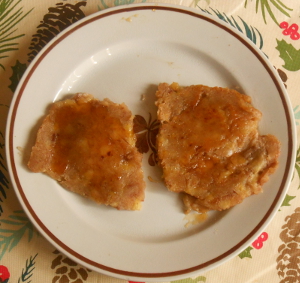
Add bananas to mixing bowl. Mash bananas with fork. or squoosh with hands. Add cinnamon, sugar, and vanilla to mixing bowl. Mix with fork until batter is well blended. Add flour. Mix with fork until well blended. Add oil to pan. Heat butter on medium heat until it starts to bubble. Ladle ¼ cup of batter at a time to pan. Flatten with spatula. Do not let fritters touch each other. You might need to cook in batches. Cook one side for 3 minutes on medium-high heat and then for 2 minutes on the other side or till fritters are golden brown all over. Drizzle each fritter with 1 teaspoon honey.

Note: cooking times tend to go down with each batch. This is true even with the batch. Watch the fritters carefully and adjust cooking times and even temperatures accordingly. Remember golden brown, always golden brown. These fritters are crumbly, so be sure to get the spatula completely under the fritter when flipping them. Flip carefully.

TIDBITS

1) “Shipoopi” is also a rousing song from the great musical The Music Man. Shipoopi rhymes with Djibouti. This is no accident. Artists and song writers in particular need solitude to create works of genius. Life in American cities is rife with telemarketers, neighbors blasting music, car horns blaring, television commercials, and door-to-door lutefisk vendors knocking at your door. The Djibouti of 1943 to 1966 had none of those distractions.

2) The Golden Age of Musicals was also 1943 to 1966. This is no coincidence. The great song writers all stayed in quiet, quiet Djibouti where they never had an idea driven out of their head.

3) But in 1967, Djiboutians began agitating for independence. The demonstrations were mainly non-violent and orderly. However, they were too loud and cacophonous for the sensitive ears and minds of the song writers. The writers left the country. But they had no place to go. Djibouti had been the world’s last haven of quiet. The Golden Age of musicals ended. “Shipoopi” remains an homage to this once tranquil land. “Djibouti, Djibouti, but you can eat there yet.”

– Paul De Lancey, The Comic Chef

My cookbook, Following Good Food Around the World, with its 180 wonderful recipes, my newest novel, Do Lutheran Hunks Eat Mushrooms, a hilarious apocalyptic thriller, and all my other books, are available on amazon.com.

Categories: cuisine, history, international | Tags: , , , , , , , , , , , , , , , , , , , , , , , , | 2 Comments

Create a free website or blog at WordPress.com.