Posts Tagged With: thriller

Elephants Graveyard – Part 1

“The Elephants’ Graveyard is right there in Biloxi.”

The cabby’s assertion startled me.

“Biloxi, Mississippi? Are you sure about that? It seems hard to believe.”

“It’s true all right. You have my word as a cabby.”

“Come now, I don’t see any elephants here.”

“We’re not in Biloxi, friend. We haven’t left the airport. We gotta go east to Biloxi to see any elephants. The FAA don’t let no elephants into Gulfport. Dangerous to landing planes, you know.”

The meter ran as he talked and I was anxious to make my meeting, but I couldn’t resist saying,

“But the government is shut down again. Who will keep the elephants out of Gulfport now?”

“Damn!” The cabby slammed on the brakes to stop the cab, which wasn’t hard to do as we weren’t moving. He jumped out of the car. “Ow!” Chastened and little more cautious he opened the door and then got out. He retrieved a massive weapon out of the trunk and made his way back to the cab.

“Here, take this,” he growled as he hurled the gun at me. Minutes later when the ringing in my ears subsided I replied,

“How is it that I never read about it, anywhere?”

“Oh, I don’t know. I guess the local reporters just got used to ’em, and just never wrote ’em up.”

“But surely, the migration of elephants to Mississippi would have made front-page news?”

“You’re wrong, friend. The elephants came here in 1862, right in the middle of the war. Folks round were just too preoccupied with the fighting to notice them right off. But soon enough, General Lee enrolled them into his army. The ‘phants, as some call them, were in Pickett’s charge at Gettysburg. We would have won the battle, but them Yankees let loose thousands of mice. Those mice scared the ‘phants, who turned around and stampeded the Rebel men. That’s how we lost the war.”

“Fascinating, but why did they choose here of all places?”

“For the peanuts.”

“But they don’t grow peanuts in Mississippi, they grow peanuts in Georgia as you well know.”

“Well, those ‘phants didn’t know nothing about that, did they? You’re not as smart as you looked, Mister. I’m fixing to take you there, right now.”

“But, I simply must be at a meeting in Long Beach, to the West!”

He ignored my feeble protests, gunned the engine, and soon we hurtled eastward at speeds up to 20 miles per hour. Soon the fair gulf regaled us with its shimmering beauty.

Thalassa! Thalassa!”, I shouted to the cabby, “That’s Greek for the ‘The Sea.’ The Sea.”

“Yea, whatever. Look, there’s Peanuts Pavilion. Right next to that is the Planter’s dock and peanut refinery.”

“Ooh, that looks quite interesting. May we stop and investigate?”

“No.” He stomped on the gas pedal as way of protest and soon we were pushing the edge of the envelope at 25. “We’re looking for ‘phants. You gotta problem with that?”

“No,” I meekly replied. Since I was at the cabby’s mercy, I resolved to endure the best I could and would resolutely scan the horizon for the noble beasts whenever I wasn’t following the soaring meter.

Soon we crossed the border into Biloxi and immediately the clouds parted to reveal glorious, golden shafts of sunlight. I could almost swear I could hear angels singing melodious hymns of joy. The cabby belched.

Soon, the traffic in our lane slowed and eventually stopped at Eisenhower Drive, while in the lane to the bookstore, traffic ground to a halt. All the while, the meter merrily climbed. We noticed state troopers inspecting the cars, talking to all, waving some on, and pulling over others. Soon, one made his way to the cabby’s Honda Accord.

“Transporting any illegal elephants with you?”

“No,” the cabby explained at length as he handed over his license.

The trooper examined the license and then carefully pointed his flashlight inside the cab. Eventually, he seemed satisfied by our serene demeanor and waved us on. Whoosh, aided by a tail wind, we again darted eastward, leaving even the most vigorous pedestrians far behind. I turned to watch the Miss-Elephant-Rider-of-the-Mississippi-Gulf-Coast contest taking place on the beach; so did the cabby.

Crash! After shaking off the shattered glass, I looked up to behold a most angry pachyderm. Instinctively, I knew the elephant’s name to be Felix.

“What ho, Felix! How’s it hanging?” I bantered cheerfully to the gray skinned beast breathing in my face. Evidently, this was not proper elephantine etiquette as Felix trumpeted loudly as he crushed the front of the cab with one mighty stamp.

“Damn,” gushed the rattled cabby and then moments later, “I’m ruined.”

“My goodness, it’s not as bad as all that,” I opined. “Aren’t you covered by AAA insurance? I have it and it explicitly states that they will replace any one car crushed by a rampaging elephant.”

“Yep, but that won’t do me no good. That ‘phant will just hunt me down and crush every car I drive.”

“Surely, you are blowing a little tiff by that elephant all out of proportion.”

“No, I’m not. An elephant never forgets.”

The cabby remained inconsolable, and so, I waited quietly for AAA to bring the new cab. I then spied the smashed meter, and so, waited contentedly for the new car.

– Paul De Lancey, The Comic Chef

My cookbook, Following Good Food Around the World, with its 180 wonderful recipes, my newest novel, Do Lutheran Hunks Eat Mushrooms, a hilarious apocalyptic thriller, and all my other books, are available on amazon.com.

Categories: humor, sports | Tags: , , , , , , , , , , , , , , , , , , , , , | Leave a comment

Posole Rojo

Mexican Soup

POSOLE ROJO

INGREDIENTS – PORK

3 pounds pork shoulder or leg
60 ounces canned-garbanzo beans (aka chickpeas)
2 bay leaves
7 garlic cloves (4 more later)
3 quarts water

INGREDIENTS – RED SAUCE

6 guajillo chiles or ancho chiles
3 ancho chiles or guajillo chiles
3 cups water
½ small onion (½ more later)
4 garlic cloves
1 tablespoon Mexican oregano or marjoram or oregano
½ teaspoon pepper
1 teaspoon salt

INGREDIENTS – FINAL

2 avocados
¼ head cabbage
4 red radishes
½ small onion
1 cup tortilla chips

SPECIAL UTENSIL

electric blender

Serves 16. Takes 2 hours 30 minutes.

PREPARATION – PORK/GARBANZO BEANS

Cut pork into 1″ cubes. Drain garbanzo beans. Cut 7 garlic cloves in half. Add pork, garbanzo beans, bay leaves, 7 garlic cloves, and 3 quarts water to 1st, large pot. Bring to boil using high heat. Stir occasionally. Reduce heat to low. Simmer for 1 hour or until pork cubes can be pulled apart easily with a fork. Skim off foam with spoon. Stir enough to prevent burning. Remove and discard bay leaves. Remove pork and garlic. Keep water in pot. Shred pork completely using 2 forks. Smash garlic bits with fork. Return pork and garlic to pot.

PREPARATION – RED SAUCE

While pork simmers, add 3 cups water to 2nd pot. Bring to boil. Seed guajillo and ancho chiles to pan. Roast at medium heat for 8 minutes until they start to soften. Stir occasionally . Add chiles to 2nd pot. Cover and remove from heat. Let chiles sit in water for 15 minutes or until they have completely softened. Cut ½ small onion into 4 pieces. Add guajillo chiles, ancho chiles, 4 garlic cloves, 4 onion pieces, and water from 2nd pot to blender. Set blender to puree and blend until pureed. This is the red sauce. Add red sauce, Mexican oregano, pepper, and salt to the pot containing pork and garbanzo beans. Simmer on low heat for 10 minutes. Stir occasionally.

PREPARATION – FINAL

Add red sauce/pork/garbanzo beans to bowls. Cut avocados into 16 pieces each. Shred cabbage. Mince ½ small onion. Slice radishes as thinly as possible. Spread avocado, cabbage, onion, radish, and tortilla chips evenly over bowls of red sauce/pork/garbanzo beans.

TIDBITS

1) The Italian peninsula in 1848. Peasants rioted against the nobles. The nobles suppressed the peasant uprising. Italians took up arms against their foreign masters. The foreign masters fought back. Bullets were positively whizzing everywhere.

2) Then the Second War for Italian Independence began in 1859. Armies marched all over the place. Bullets and cannonballs streaked against the sky. It was all too much for the simple chef, Fabio Marinara who determined to leave for America. His customers pleaded for him to stay. “No,” said Fabio at length.

3) So, the plucky Italian sold all his possessions and bought a ticket to New York on the SS Seaweed.

4) But he boarded instead the SS Flan to Veracruz, Mexico. But that was okay, for Mexican food was love at first sight for Fabio. “Tacos, where have you been all my life?” thought Chef Mariana.

5) Well, across the Atlantic Ocean. But anyway, Chef Fabio opened up a restaurant on the Gulf of Mexico. Within weeks, he perfected this soup, the posole rojo.

6) People loved his soup. They’d burst out singing, “Posole Rojo” everytime this food of the gods went by their tables.

7) A Italian lyricist, Giovanni Capurro heard these outbursts of ecstasy. He thought they were referring to Veracruz’s magnificent red sunsets. He interpreted them to say, “O sole rojo” or “O my red sun.”

8) But Capurro found that the song burgeoning within his heart flowed much easier when he tweaked the words to “O solo mio” or “O my sun.”

9) He took his song back to Naples. Capurro’s song has been an enduring global hit ever since. “O Sole Mio” has even been sung twice on Sesame Street. Now you know.

– Paul De Lancey, The Comic Chef

My cookbook, Following Good Food Around the World, with its 180 wonderful recipes, my newest novel, Do Lutheran Hunks Eat Mushrooms, a hilarious apocalyptic thriller, and all my other books, are available on amazon.com.

Categories: cuisine, history, international | Tags: , , , , , , , , , , , , , , , , , , , , , , , , , , , , , , , , , , | 4 Comments

Chicharrones

Mexican Appetizer

CHICHARRONES

INGREDIENTS

2 pounds pork skin*
1 cup lard
½ teaspoon salt

* = The best source is a Mexican supermarket. It can be quite difficult to find online.

SPECIAL UTENSIL

electric skillet

Serves 8. Takes 1 hour 20 minutes.

PREPARATION

Cut pork skin into 3″ squares. Add lard to electric skillet. Heat lard at 375 degrees until a tiny bit of pork skin will start to dance in the oil. Use spatula to carefully add pork-skin squares to electric skillet. Be careful, adding the squares might cause the hot oil to splatter. (May I suggest wearing an apron, standing an arm-length from the skillet and holding the skillet lid in the other hand when adding the squares?)

Fry the pork squares at 375 degrees for 35 minutes or until the pork skin starts to pop and then turn golden brown. Stir frequently to the squares from sticking to the bottom of the skillet and burning. Remove deep-fried pork squares, chicharrones, and let cool on paper towels. Sprinkle with salt. Chicharrones may be eaten as is or broken into smaller pieces.

TIDBITS

1) Ronaldo Gonzalez used to operate a Mexican supermarket. One of his items was chicharrones. This clever Ronaldo did anagrams in his spare time. He soon discovered that chicarrones is an anagram for Ron’s Chic Hare.

2) He asked his wife, Desdemona, a talented seamstress to design a stylish outfit for his hare, Harry. Here is her design. I’m sure you’ll agree that the outfit is très chic.

3) Indeed, D&R Designers, in just two years has leaped from selling a hundred hare outfits to dominating the global rabbit clothing scene. Runway shows for bunny models appear to be their next business step. Tryouts will be held soon.

– Paul De Lancey, The Comic Chef

My cookbook, Following Good Food Around the World, with its 180 wonderful recipes, my newest novel, Do Lutheran Hunks Eat Mushrooms, a hilarious apocalyptic thriller, and all my other books, are available on amazon.com.

Categories: cuisine, history, humor, international | Tags: , , , , , , , , , , , , , , , , , , , , , , , | 1 Comment

The Wonder Dog – Part 2

Captain Pizarro surveyed the yellow-orange expanse and announced that we were going to eat those hot dogs or die. Pale-faced Lieutenant Kelso staggered to his feet to voice his support before pitching forward into a huge bowl of papaya-bisque soup. Corporal Conigliaro timidly suggested that eating rotting hot dogs might kill us, or worse, give us diarrhea. Sergeant Gagliano put both of his powerful hands on Conigliaro and volunteered the Corporal for the honor of tasting the hot dogs.

Conigliaro said that although he was aware of the immense honor, he was reasonably sure that army regs stated that a certified medical doctor had to test all suspect foods. He was only an unregistered quack and so, respectfully declined.

It appeared that some stupid health regulation written by some desk-bound, pencil pusher in the Pentagon was going to deny us this wondrous, alternate source of food. However, our Sarge immediately volunteered Private Romero, a veterinarian, to taste the frankfurters.

Bilko accepted the assignment but said that he was such a good vet that he could determine the quality of the franks just by looking at them. He headed straight to the Hut of Hell, stopping only at the infirmary to put on a gas mask. Moments later he returned, ashen and trembling, stating that they were safe to eat. Though I did hear him mumble as he headed back to his tent hot dogs should not display internal movement. The other airmen just heard our cook announce hot dogs for tomorrow’s lunch.

Around eleven o’clock Cookie started boiling the franks. Fortunately, a strong wind from the south blew the fumes away from the camp toward the town of Lake Harbor. About that time in an unrelated incident, Bert Taylor, a tea tester from that town, suddenly pulled his own head off and died.

We all lined up at the mess tent to eat our hot dogs in shifts of one hundred which was also the number of gas masks on hand. Well, the first shift manfully ate their hot dogs and immediately fell to the floor suffering from violent convulsions. Then Private Owchinko’s stomach burst open flinging his guts all over the mess hall. Soon, everyone’s guts erupted just like cooking popcorn. Owchinko turned his hideously contorted face toward me and said, “Dang, at least it wasn’t papaya.” He then died with a look of complete serenity on his face; well, at least as serene as one could get with an exploded stomach.

We carried the men outside and buried them properly. We put on all their tombstones, “He wouldn’t eat papaya.” Since bullets were scarce at our base, we gave our departed comrades ten hot-dog salutes. Most of these franks exploded in air giving off the same noise as rifle shots. However, some didn’t explode until they hit the ground. One hot dog, in particular, landed on a latrine and exploded, scattering its contents for hundreds of yards. Private Franco noted that the smells of the latrine improved the smell of the hot dog. However, Captain Pizarro displayed true genius when he stated these franks could be terrible weapons of war.

We drifted along in papaya hell until we received orders to fly over to Europe. The Germans had just broken through our lines in a massive offensive now known as the Battle of the Bulge. Disaster loomed and every airman was needed. We armed our bombers with our hot dogs, which now had been rotting for an additional four months in the hot, humid Hut of Hell.

Our 800th Bomber Group arrived just as the Germans seemed poised to overrun the heroic defenders of Bastogne. None of our infantry or armored divisions could get to them in time. None of the other bomber groups could get off the ground due to bad weather. However, we could and we did.

We bombed the hell out of those Nazis. A Tiger tank can take a direct hit from a Sherman tank just twenty yards away and drive away only mildly annoyed, but just one hit from our franks just ripped those tanks to bits. Down they fell, ton after ton of freedom franks. The foul, poisonous vapors from the exploding dogs suffocated the supporting German infantry. Our hot dogs created a huge hole in the German lines into which poured General Patton’s troops. Patton, that glory hog, claimed full credit for the American victory at Bastogne.

However, we knew better and so did many others. In fact, Winston Churchill, Prime Minister of Great Britain praised us saying, “This was their finest meat product.”

– Paul De Lancey, The Comic Chef

My cookbook, Following Good Food Around the World, with its 180 wonderful recipes, my newest novel, Do Lutheran Hunks Eat Mushrooms, a hilarious apocalyptic thriller, and all my other books, are available on amazon.com.

Categories: food, history, humor, short story | Tags: , , , , , , , , , , , , , , , , , , , , , , | Leave a comment

The Wonder Dog – Part 1

We won the war. We brought the Nazis to their knees, not some namby-pamby foot soldier who probably counted dodging Spam thrown in the mess halls as combat experience. Yes sir, it was me and the airmen of Okeechobee. Young man, I’m gonna tell you our story.

Okeechobee, Florida then was only known for its millions of bugs; huge bugs the size of baseballs. But it was there, in 1944, that the Army set up the 800th Bomber Group, captained by Henry Pizarro.

Well, we were out in the middle of nowhere in a state often forgotten by the rest of the Union. Supplies never did get to us in a regular manner. Sometimes we’d go weeks without any supplies. Sometimes, we got a lot of stuff we didn’t really need. One week they sent us one million scarves, and 22,187 bird feeders stamped “U.S. Army bird feeder, Red-Headed Woodpecker Only.” Antonio Cedeno, Army Head Scratcher First Class, scratched his head and said, “That’s army for you.” Oh, we also received eight hundred tons of papayas. It seemed that although our nation’s scientists were still failing with the general concept of refrigeration, they had miraculously found a way to refrigerate papayas several months ago.

Well, around August, we had run out of all food but papayas for two months, and no one wanted to eat bugs. Hell, the bugs had been biting us so much that some of us figured we’d be cannibals if we’d eat them. So, we approached Lieutenant Kelso, who was in charge of food supplies. Kelso said that he was mighty sick of papaya soup and papaya burgers. He said he’d raise heaven and earth to find some new food.

The next day we heard a terrible ruckus all around us. Every flea-bitten mutt in the flea-bitten state of Florida was barking, yelping, yipping, and scratching his balls. Sergeant Niekro went out to investigate. Apparently, Kelso planned to use these dogs to sniff up some food for us.

Well, I decided to follow the dogs. They headed away from the mess hall as even dogs get tired of papaya biscuits. Those mutts made a bee line toward the swamp where bugs felt particularly secure and ornery. Way in the distance I could make out that huge ominous, gray, metallic building so forbidding that even the chaplain called it “the Hut of Hell.” The Hut of Hell housed our chemical supplies, used oil drums, and various pleasant poisons.

Those dogs just ran to the Hut and barked something fierce. Kelso, opened the door and immediately the dogs keeled over in agony. Kelso doubled over and proceeded to vomit big yellow chunks of papaya loaf. Sure, it was up to me, Robert Carbo, the man with the big sniffer. I dodged a stream of papaya spew from Kelso and went inside.

As God is my witness, I have never seen so many hot dogs in my life. These hot dogs were arranged in huge columns. Each column was twelve feet long by ten feet wide and stretched at least fifty feet up to the ceiling. There were thousands of these majestic columns.

Well, perhaps not majestic, more like tons of decaying, larva infested, grayish-green beef shapes. How long had they been sitting in that metal building in Florida’s fine, humid, 120-degree weather? However, stench worse than Private Aparicio’s pits after a twenty-mile hike, prompted to me continue this thought outside. I wrenched my boots free from some hot-dog ooze and bolted outside.

I carried Kelso all the way back to the infirmary. Unfortunately, our doctor was away in Miami picking up popsicle sticks off the sidewalks as we had run through our last shipments of tongue depressors. Corporal Johnny Conigliaro, a quack in civilian life, prescribed a dose of deadly nightshade, a rather poisonous, purplish flower. Kelso nearly died from this treatment but did not complain, saying, “It’s worth risking death to eat something that’s not yellowish orange.”

A week later Captain Pizarro, arose from his desk and put on his papaya-woven flak jacket and walked to the mess tent. The cook had outdone himself with a gourmet feast. We started off with a snappy papaya fondue and a Waldorf salad where the apples, celery, walnuts, and mayonnaise were substituted with papaya, papaya, papaya, and papaya sauce. For the main course he regaled us with a choice of: barbecued papaya sandwiches on papaya bread with a papaya sauce or chicken cordon bleu, where instead of chicken, ham, gruyere cheese, breading, and butter, he substituted papaya, papaya, curdled papaya juice, papaya crumbs, and melted papaya. For dessert we could choose either the papaya balls or the papaya flavored ice cream made with creamed papaya instead of cream. We washed down this feast with good ol’ papaya juice.

– Paul De Lancey, The Comic Chef

My cookbook, Following Good Food Around the World, with its 180 wonderful recipes, my newest novel, Do Lutheran Hunks Eat Mushrooms, a hilarious apocalyptic thriller, and all my other books, are available on amazon.com.

Categories: Uncategorized | Tags: , , , , , , , , , , , , , , , , , , , , , , , , , | Leave a comment

Nidi di Rondini

San Marinese

NIDI DI RONDINI

INGREDIENTS

1 12-ounce package lasagna noodles
2 tablespoons butter
2 tablespoons flour
1 cup milk
⅛ teaspoon salt
⅔ cup marinara sauce (⅓ cup more later)
1¼ cups grated mozzarella
½ pound prosciutto or deli-sliced ham
⅓ cup marinara sauce
¼ cup grated Parmesan cheese

SPECIAL UTENSILS

8″-x-8″ casserole dish
kitchen scissors or scissors
aluminum foil

Serves 5. Takes 1 hours 45 minutes.

PREPARATION

Preheat oven to 350 degrees. Cook lasagna noodles according to directions on package. (Do not let noodles stick together. You might need to cook them in batches.) Drain noodles. Spray flat surface. Place lasagna noodles flat on flat surface. (Do not let them touch each other.)

While noodles cook, add butter to pan. Melt butter using medium heat. Gradually add in flour. Stir frequently until well blended. Gradually add milk until the sauce thickens. Stir frequently. Add salt. Stir until blended. This is the bechamel sauce. Remove pan from heat.

Pour ⅔ cup marinara sauce into casserole dish. Smooth with spatula. Spread bechamel sauce evenly over all the noodles. Sprinkle mozzarella evenly over the bechamel sauce. Place proscuitto strips over the bechamel-mozzarella lasagna noodles. (If necessary, trim or fold prosciutto strips so that they are narrower than the noodles.)

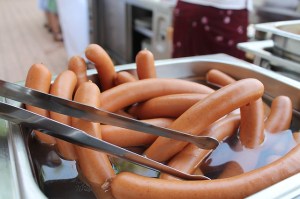
Roll up lasagna noodles so that they form a tight cylinder. Place lasagna cylinders upright and close together in casserole dish. (If necessary, place wadded-up balls of tin foil in casserole dish to keep lasagna cylinders from falling over.) Make four ½” cuts at the top of each lasagna cylinders. Pull the lasagna between the cuts down and out a bit. so that they look like rose petals.

Drizzle ⅓ cup marinara sauce over the lasagna cylinders. Sprinkle cylinders with Parmesan cheese. (Not so much that you can’t see the rose-petal design of the lasagna cylinders.) Bake for 35 minutes or until the tops of the cylinders turn crisp and golden brown.

TIDBITS

1) Nidi di rondini tastes great. Anyone making this entree will be immediately be hailed as an amazing chef and host.

2) If you are up for a Nobel Prize, you would do well to serve this dish to the judges.

3) As of press time, it is not illegal to do this.

4) So, what are you waiting for?

5) Nidi di rondini comes from the great, but tiny country of San Marino.

6) Despite being the size of a rather large postage stamp (24 square miles, 61 square kilometers), the San Marinese have preserved their independence for 1,816 years.

7) The above number is accurate as of the time of writing. Please increase the above number by one for every year after 2021.

8) Anyway, how did this tiny country maintain its independence from many other countries with much bigger armies such as: the Roman Empire, the Papal States, the French Empire under Napoleon, Italy, and Hitler’s Germany?

9) Simple. As culinary historians will tell you, soldiers with red hair make the fiercest warriors in the world. San Marino has always had fighting redheads. The chefs of this happy land commemorates their heroes with these rolled-up lasagna rolls topped with marinara sauce.

10) However, the most famous fighters in the world come from Scotland. Neighboring England failed for centuries to conquer the Scots, The English armies quailed, broke ranks and fled in terror whenever they caught sight of all that Scottish red hair.

11) The only success the English had came from their archers. But, of course, the archers were to far away to see the hair color of the Scottish pikemen.

12) One wonders why the English army never colored their hair red. Then the Scottish warriors would have fled whenever came in contact with the English.

13) What if? What if all the countries of the world made their soldiers die their hair?

14) All armies fear fighting fierce redheads. With all armies comprised of gingers, no army would dare attacking any other.

15) Peace would break out.

16) There you have it. Dye the hair of all combatants red.

17) I see a Nobel Peace Prize in my future, as long as I remember to serve nidi di rondini to the judges.

– Paul De Lancey, The Comic Chef

My cookbook, Following Good Food Around the World, with its 180 wonderful recipes, my newest novel, Do Lutheran Hunks Eat Mushrooms, a hilarious apocalyptic thriller, and all my other books, are available on amazon.com.
Categories: cuisine, history, international | Tags: , , , , , , , , , , , , , , , , , , , , , , , , , , , , , , , | 3 Comments

Almond Sherry Soup from Spain

Spanish Soup

ALMOND SHERRY SOUP

INGREDIENTS

1 onion
2½ tablespoons butter
15 saffron threads
¼ pound blanched almonds
2 eggs yolks
3 cups chicken stock
3 tablespoons sherry
¼ teaspoon nutmeg
⅛ teaspoon pepper
¼ teaspoon salt
½ teaspoon Spanish paprika or paprika
½ cup cream
2 tablespoons fresh parsley
2 teaspoons slivered almonds

SPECIAL UTENSIL

spice grinder or food processor

Serves 5. Takes 1 hour.

PREPARATION

Mince onion. Melt butter in pan using low-medium heat. Add onion. Simmer at low-medium heat for 8 minutes or until onion softens and turns yellow. Stir frequently. Add saffron. Simmer at low-medium heat for 3 minutes. Stir occasionally. Add blanched almonds to pan. Toast by using medium-high heat until almonds start to brown. Grind toasted almonds until they become a paste. Add almond paste, egg yolks, and minced onion to mixing bowl. Mix with fork until you a well blended almond/egg/onion paste.

Add chicken stock, sherry, nutmeg, pepper, salt, and Spanish paprika to pot. Bring to boil using high heat. Stir occasionally. Reduce heat to low-medium and add cream. Gradually add almond/egg/onion paste. Stir until well blended. Simmer at low-medium heat for 10 minutes. Stir occasionally. While soup simmers, mince parsley. Garnish soup with parsley and slivered almonds.

TIDBITS

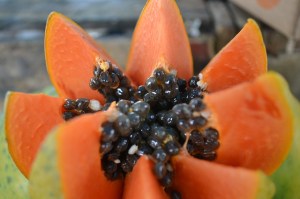
1) Last year, culinary archeologists found this painting in the Rohoño cave near Valencia, Spain. They believe it depicts a caveman giving thanks to the gods for raining down tasty almond sherry soup. (See the soup bowls at the bottom.) Conventional archeologists disagree. Prehistorians are a fractious lot. But you know, this soup is from Spain. So maybe.


– Paul De Lancey, The Comic Chef

My cookbook, Following Good Food Around the World, with its 180 wonderful recipes, my newest novel, Do Lutheran Hunks Eat Mushrooms, a hilarious apocalyptic thriller, and all my other books, are available on amazon.com.
Categories: cuisine, international | Tags: , , , , , , , , , , , , , , , , , , , , , , , , | 2 Comments

The Great Chicken Invitational – Part 2

But the reason for their poor performances lay in the chickens themselves. Remarkably, no one had considered the possibility that a twenty-ounce chicken using a four-inch club would drive a regulation golf ball a considerably shorter distance than would a two-hundred-pound man with a regulation club. Furthermore, for all their attentiveness to their swings, the chickens’ lack of hands proved to be a major obstacle to getting firm grips on their clubs.

Two weeks later, eighteen hardy chickens reached the green. Two chickens hit their balls into sand traps and couldn’t get out even though they remembered to use their chicken-sized wedges. Ten other chickens ended their brief golf careers by running into the adjacent woods to search for worms, and disappeared forever.

Play picked up considerably on the green. It turned out that chickens are natural born putters. Aided by cleverly-designed putters, made small enough to be held in their beaks, they dazzled the crowd with one precise putt after another. “I wish I could putt like those chickens,” said Norm Gregson of the PGA.

Observant golfers noticed that the chickens stand so close to the ground that they can figure out exactly which way their putts would break. One of these golfers, John Hona, later suggested to the PGA that chickens be used as “designated putters” in human-golf tournaments. It turned him down flat, “The answer is no.”

Official scorers added up the strokes at the end of the first hole. Roxanne led the pack by thirteen strokes with a score of 397. Technically, Roxanne shot a tricentinonadecadouble bogey, but the press just called it a “chicken bogey.”

Around the third week, while the chickens were half way through the second hole, sarcastic geeks ruffled the plucky poultry by yelling, “Cacciatore,” “Southern Fried,” or by calling their clubs “drum sticks.” The chickens flinched under the pressure of these specieist remarks, slicing more balls than usual. The organizers resorted to handing out free, fresh eggs from the competitors to keep them quiet.

Froussard golf club celebrated the Fourth of July in grand style. Organizers labored all week setting up a spectacular fireworks display. The remaining eleven chickens then contributed to the crowd’s enjoyment when they put on a snappy, morality play based on the daily life of a chicken. Afterwards, all sorts of chicken dishes were served to a hungry audience. “That’ll teach you to miss the cut,” growled Bob Banks as he bit into a hot-and-spicy chicken wing.

Three chickens exited the tournament in August. Vain and high-strung, Sandra, up and left the course clucking about a bad feather day. Nadine, suddenly felt the need to establish her roots and departed to seek her biological mother. Spontaneous combustion claimed the life of Martha as she prepared to putt out the eighth hole. “If she was going to blow up, she should have done it during last-month’s fireworks display,” sniffed organizer, Beverly Hatcher.

Rain fell heavily in late October. The downpour bothered none of the chickens, who clucked, drove, and putted as if nothing was wrong. Seeing this, a golfer’s wife remarked, “They’re just like human golfers.”

Snow fell heavily in the middle of December, and so, play deteriorated rapidly when chickens swung their clubs with difficulty through snow that came up to their beaks. Many chickens could no longer find their balls in the snow drifts. Indeed, the tournament’s officials lost several chickens in the deep snow.

By New Year’s Day, only two chickens remained, Agatha and Roxanne. These two had reached the green and were within only a few hours of finishing the course. Tension and excitement coursed throughout the golfing world as the two chickens were tied, each having a score of 6,127.

Interest in this tournament had grown so feverish that the television networks pushed the New Year’s Day bowl games back one week. Tens of thousands of people lined the rope around the eighteenth hole while helicopters from scores of television stations, domestic and foreign, circled above. “Those chickens upstaged us,” complained Bob Gallina, quarterback of the top ranked, LSU Tigers.

The crowd cheered every well-executed putt of the dueling chicks. Excitement reached a peak when Roxanne holed out with a score 6,157. But Agatha was only four inches from the cup, needing to make her putt for a sudden-death tie.

Agatha intently bent down, surveyed the green, picked up her putter, and set herself to putt. Then, disaster struck! A red fox burst onto the green and snatched Agatha in his hungry jaw. Hundreds of people ran after the fox into the trees to save Agatha, but found only a pile of feathers and a tiny putter.

The crowded peeled away from the course in horror and rage. Its hero had been eaten, an unprecedented event in golf. Things got ugly when many yelled threats at the tournament’s organizers. The more rabid fans produced nooses and proposed hanging the hated organizers. Hearing this, the objects of their hate took off in a flash, jumped into their cars, and sped away.

That was the end of the Great Chicken-Golf Invitational. From nearby Canby, Montana, the organizers declared Roxanne the winner, by default.

The carnage of the tournament appalled golfers and people everywhere. The American Wildlife Federation and corporations withdrew their sponsorships of a proposed second tournament. Interest in chicken golf died off rapidly after that. Now only a few people still think back to the days when chickens had a tournament of their own.

– Paul De Lancey, The Comic Chef

My cookbook, Following Good Food Around the World, with its 180 wonderful recipes, my newest novel, Do Lutheran Hunks Eat Mushrooms, a hilarious apocalyptic thriller, and all my other books, are available on amazon.com.
Categories: history, short story, sports | Tags: , , , , , , , , , , , , , , , , | Leave a comment

Gibanica (Serbian Cheese Pie)

Serbian Dessert

GIBANICA
(Cheese Pie)

INGREDIENTS

6 eggs
2 cups cottage cheese
1 cup crumbled feta cheese
1 cup sour cream
¾ cup (1½ sticks) butter
1 pound filo (phyllo) dough

SPECIAL UTENSILS

9″-x-13″ baking pan or casserole dish

Serves 8. Takes 1 hour 30 minutes.

PREPARATION

Separate eggs. Beat egg whites until fluffy. Add egg yolks, cottage cheese, feta cheese, and sour cream to mixing bowl. Blend thoroughly with whisk or fork. Fold in egg whites. Preheat oven to 360 degrees. Melt butter using low heat. Brush baking pan with 2 tablespoons melted butter.

Place 2 sheets filo dough in baking pan. Drizzle 2 tablespoons melted butter over filo. Spread ¼ cup egg/cheese mix on top. Gently crinkle 2 filo sheets into accordion-like balls. Dip accordion balls into cheese/egg mix from bowl until lightly coated. Place coated accordion-like filo balls over flat filo sheets in pan. Repeat until you have 2 filo sheets remaining.

Top with remaining 2 filo sheets. Brush top filo sheets with remaining butter and cheese/egg mix. Bake in over at 360 degrees for 50 minutes or until top is reddish, golden brown. Serve warm or let cool.

TIDBITS

1) Many different groups of people settled America’s Old West. The most obvious types were men and women. It’s obvious now, but no historian before me had ever mentioned it.

2) Chinese settled Western America, but Irish, Swedes, and Germans left Europe to come to the New World’s eastern shores and kept going until they hit the Great American Plains. For a body in motion tends to stay in motion. Long-ago settled Americans from the east pulled up stakes and joined those traveling west. For such a drastic measure as the only way to avoid house calls from salesmen offering to extended their wagon’s extended warranty.

3) However, Serbian cheese pie makers did not participate in the Great Western Movement as their eggs, cottage cheese, feta cheese, and sour cream never survived the months-long journey.

– Paul De Lancey, The Comic Chef

My cookbook, Following Good Food Around the World, with its 180 wonderful recipes, my newest novel, Do Lutheran Hunks Eat Mushrooms, a hilarious apocalyptic thriller, and all my other books, are available on amazon.com.

Categories: cookbook, cuisine, history, international | Tags: , , , , , , , , , , , , , , , , , , , , , , , , | Leave a comment

Chicken Kebabs from Lebanon

Lebanese Entree

CHICKEN KEBABS

INGREDIENTS

3 boneless chicken breasts
7 garlic cloves
1 green bell pepper
1 small onion
¼ cup lemon juice
6 tablespoon Greek or plain yogurt
3 tablespoons olive oil
¾ teaspoon cumin
1 teaspoon ginger
1 teaspoon oregano
1 teaspoon salt
1 teaspoon turmeric
½ teaspoon white pepper or pepper
2 tablespoons red vinegar or apple cider vinegar
¾ teaspoon tomato paste
6 pita loaves

SPECIAL UTENSILS

outdoor grill
6 skewers (If wooden, soak in water for 20 minutes.)

Serves 6. Takes 3 hours.

PREPARATION

Cut chicken into 1″ cubes. Crush garlic cloves. Seed and chop green bell pepper into 1″ squares. Chop onion into 1″ squares. Add all ingredients to large mixing bowl. Mix with hands until chicken cubes are well coated. Cover and let marinate in refrigerator for 2 hours.

Thread chicken cubes, bell pepper squares, and onion squares onto skewers. Turn heat on grill to medium. Add skewers to grill. Heat all sides for 3 minutes each. Place skewers in large pot and cover. Let rest for 10 minutes. (This step helps keep the chicken cubes moist.) Serve on skewers or if using pita loaves, remove all ingredients from skewers and place on pita loaves.

TIDBITS

1) Kebabs have been around since Ancient Greece. See Herodotus’s History of Greek Kebabs. You might think it should have been called History of Ancient Greek Kebabs. However, he lived in ancient times only to us. He thought he was being quite modern. Anyway, Herodotus noticed the shape of the pita bread would make a nifty shield and the skewer would make a spiffo spear. Ancient Greek warriors, hoplites, adopted both ideas and would become their era’s fiercest warriors. Now you know.

– Paul De Lancey, The Comic Chef

My cookbook, Following Good Food Around the World, with its 180 wonderful recipes, my newest novel, Do Lutheran Hunks Eat Mushrooms, a hilarious apocalyptic thriller, and all my other books, are available on amazon.com.

Categories: cuisine, history, international | Tags: , , , , , , , , , , , , , , , , , , , , , , | Leave a comment

Create a free website or blog at WordPress.com.