Posts Tagged With: Paul De Lancey

Llapingachos

Ecuadorian Entree

LLAPINGACHOS
(Potato Cheese Patties)

INGREDIENTS – POTATOES
½ small white onion (½ small onion more later)
2½ pounds russet or brown potatoes
2 tablespoons vegetable oil (additional ¼ cup vegetable oil later)
½ tablespoon achiote powder
3 green onions
¼ teaspoon salt (¼ teaspoon more later)
1 cup queso blanco, queso fresco, quesillo, or mozzarella cheese
¼ cup vegetable oil (or ¼ cup per batch)

INGREDIENTS – SALSA DE MANI

1¼ cups milk
½ small white onion (See? I told you it would show up again.)
1 cup smooth peanut butter
¼ teaspoon salt

SPECIAL UTENSIL

potato masher

Serves 4. Takes 2 hours.

PREPARATION – POTATOES

Dice ½ small white onion. Peel potatoes. Cut each potato into eight pieces. Put potato pieces into large pot. Add enough water to cover potato bits. Bring water to boil on high heat. Reduce heat to low and simmer for about 20 minutes or until potato is tender. Remove potatoes and let cool.

While potatoes and then cool, add 2 tablespoons oil, onion, and achiote powder to pan. Sauté at medium-high heat for 5 minutes or until onion softens. Stir frequently. Drain potatoes Mash potatoes with potato masher. Mince green onions. Add white onion, green onion, and salt to mashed potatoes. Mix with fork until well blended.

Form mashed-potato mix into 16 balls. Insert 1 tablespoon queso blanco into center of each potato ball. Close hole in potato ball and flatten slightly to make llapingachos. Add ¼ cup oil and llapingachos to pan. Heat oil using low-medium heat. Do not let llapingachos touch. Sauté for 7 minutes or until golden brown. Gently turn over once. Repeat for each batch.

PREPARATION – SALSA DE MANI

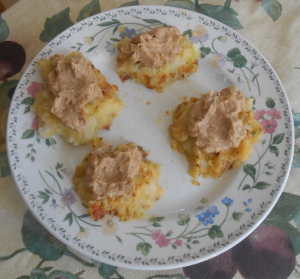
While potatoes cook and then cool, slice ½ small white onion into 4 pieces. Add this white onion and milk to pan. Simmer on low for 10 minutes. Stir frequently to keep milk from burning. Remove onion and discard. Add peanut butter and salt. Bring to boil using high heat. Stir frequently. Reduce heat to low and simmer for 5 minutes or until peanut-butter sauce, salsa de mani thickens. Spread warm salsa de mani over llapingachos.

TIDBITS

1) Ever get deja vu? Like you read this recipe some twenty years ago? Or maybe you knew tonight’s dinner would be pot roast? Okay, maybe you knew that because today is Tuesday and you always have pot roast on Tuesday. But what about the time you saw Spiffy the Squirrel win the Boston Marathon and only you had known he’d win because you somehow had seen it happen a week ago?

2) Anagram scientists know now that deja vu is not merely a feeling but instead that alga, the stuff that grows on the surface on ponds, are trying to communicate to us from the future. It’s true! Fishermen, golfers, and politicians will tell you the same. Look at the name of this dish, Llapingachos” That word is an anagram for “alga phonics.”

3) In 2032, internet providers, locked in ever increasing competition search looked frantically for faster and faster ways of data transmission. On April 2nd , Timothy “Timothy” Harris, Ph.D and CEO. of Harris Labs dropped his cell phone in an alga-ridden pond. To his surprise, it still dried out instantly! It still worked! It even worked 38% faster than before! Timmy’s brain swirled with exclamations marks. He’d win a Nobel Prize! Then his phone stopped transmitting. The screen stayed on, but the wallpaper switched to pond scum. Dr. Harris slapped his forehead. But, of course, the alga now in his phone had dissolved and replaced its the precious metals. The phone would now only send forth images and concepts the alga understood.

4) Indeed the alga, relatively dim witted due to their single-cell existence and, to be frank, lack of any secondary education to speak of, couldn’t comprehend even the simplest text messages such, “lol” or “smh.” Clearly, alga needed to up their linguistic skills. But how to do this?

5) Timothy had another “aha” moment. Didn’t there, wasn’t there, a program called “Hooked on PhonicsTM? Did they ever make a version for alga? They had! It was still out there on EBayTM. Would this program work on specific single-celled organisms? It would! Harris Labs’ revolutionary cell phones took the communication world by storm. However, Dr. Harris feared industrial espionage and never wrote down the specifics of his invention. But how would he remember to process to make his phones? After all, he was scatter-brained after all.

6) Simple. For in 2033, he had a flash of insight. Could phonics-enabled alga send messages back in time to people’s brains if they were first coded in anagrams? Yes, yes, it proved to be so! Who knew? All you had to receive this message was to walk by a stagnant pond. So yes, whenever you experience deja vu, it is really coming from alga way into the future.

7) “Remember, alga phonics,” thought Dr. Harris. What was an anagram for “alga phonics?” Why no other than the Ecuadorian dish, llapingachos! The great scientist fed this word to his alga who keep forwarding the recipe back in time to us. This is why we keep hankering for this recipe.

– Paul De Lancey, The Comic Chef

My cookbook, Following Good Food Around the World, with its 180 wonderful recipes, my newest novel, Do Lutheran Hunks Eat Mushrooms, a hilarious apocalyptic thriller, and all my other books, are available on amazon.com.
Categories: cuisine, history, international | Tags: , , , , , , , , , , , , , , , , , , , , , , , , , , | 5 Comments

Black Bean Chicken

Chinese Entree

BLACK BEAN CHICKEN

INGREDIENTS

1 pound chicken breasts
½ tablespoon corn starch
1 teaspoon grated ginger
4 teaspoons rice wine or sake
2 garlic cloves
2 shallots
2 tablespoons peanut oil or vegetable oil
½ teaspoon sesame oil
3 tablespoons black bean sauce (aka black bean paste)*
¼ cup chicken stock
¾ teaspoon sugar
1 green onion
1 teaspoon toasted sesame seeds or sesame seeds

* = If you can’t find black bean sauce, you can substitute with hoisin sauce or miso. Alternatively, use your sonic obliterator on any guest complaining about your lack of authenticity. You don’t need that negativity in your life.

SPECIAL UTENSIL

sonic obliterator

Serves 3. Takes 40 minutes.

PREPARATION

Slice chicken breast crosswise into ¼” thin strips. Add corn starch, ginger, and rice wine to large mixing bowl. Mix with whisk until well blended. Add chicken strips. Mix with hands until chicken strips are thoroughly coated. Marinate for 15 minutes.

While chicken strips marinate, mince garlic cloves and shallots. Add peanut oil, sesame oil, garlic, and shallot to pan. Heat peanut oil using high heat. (Peanut oil is ready when a bit of shallot starts to dance in the oil.) Sauté at medium-high heat for 30 seconds. Stir constantly. Add black bean sauce. Sauté for another 30 seconds. Stir constantly.

Add chicken strips, chicken stock, and sugar. Bring to boil using high heat, stirring frequently. Reduce to low and simmer for 5 minutes or until chicken is no longer pink inside. Stir occasionally. While chicken simmers, chop green onion into thin slices. Garnish with green onion and toasted sesame seeds.

TIDBITS

1) Chickens are usually calm creatures. “Live and let live is their motto.”

2) Unless, they don’t get black beans to eat. Then things get ugly.

3) In 1848, farms all around Scotland ran out of black beans. It all came to a head in the great Paisley Chicken Riots.

4) In retrospect, Paisley’s authorities should have seen it coming. The local chickens had forsaken their usual, “Poc, poc, poc, poc” for “POC, POC, POC, POC!!” Since then, chickens speaking in all capital letters and exclamation points have become a byword for terror. But back then, the town’s constabulary was caught flat footed. Enraged Scottish hens broke into seed barrels everywhere.

5) Fortunately, it rains a lot in Scotland and rain seeped into barrel upon barrel filled with corn seed, or maize seeds as the local chickens would have said. These soaked seeds became fermented from the rain. The chicken got drunk, wobbled around with outstretched wings, and finally passed out in the streets.

6) “They need intervention,” said the bonnie Franchesca. Paisley’s mayor agreed. Just one week later work started on the World’s First* Chicken Alcohol Treatment cent or as WFCAT as it is more commonly goes by. * = As far as we know.

7) The Chicken Rebellion of 1848 fizzled out. Unrest in Great Britain died down. Isn’t amazing how many people take their lead from chickens?

8) But other European leaders learned nothing from this. Their poor people starved. Middle class people protested for more and more say in government. Chickens demanded the black beans their brethren in England got. European fowl ransacked seed stores in all major cites.

9) Orators everywhere exhorted the mobs. “Citizens, are we cowards? Are we going just sit at our tables eating mushroom mush while our fowl friends lead the charge towards liberty and equality?” “No!” shouted the seething masses. And so, Europe erupted into the Year of Revolution.

10) Finally governments responded to the crisis engulfing their lands. First, no succeeding year would ever be known as 1848 for, as we all know, there is lots of symbolism in numbers. Second, generous subsidies to farmers would ensure bumper crops of black beans for centuries to come. In fact, in1927 seed growers planted so many black-beans that its future market crashed. Economic depression loomed. Alert government chefs suggested a dish made of chicken and black beans to gobble up the seed surplus.

11) You might think the chickens would have objected to being eaten. But they never have, remaining docile as long as they got their black beans to eat, “Thank you very much.”

12) Then, in 1993, the Chinese Bikini Team visited Great Britain and later brought the dish back with them. Black bean chicken became enormously popular. It still is. This is why this entree is known as coming from China.

– Paul De Lancey, The Comic Chef

My cookbook, Following Good Food Around the World, with its 180 wonderful recipes, my newest novel, Do Lutheran Hunks Eat Mushrooms, a hilarious apocalyptic thriller, and all my other books, are available on amazon.com.

Categories: cuisine, history, international | Tags: , , , , , , , , , , , , , , , , , , , , , , , , | 6 Comments

Chocolate Chip Cookies

American Dessert

CHOCOLATE CHIP COOKIES

INGREDIENTS

¾ teaspoon baking soda
2¼ cups flour
½ teaspoon salt
1 cup butter, softened
¾ cup brown sugar
¾ cup sugar
2 eggs
1¼ teaspoons vanilla
12 ounces semisweet chocolate chips

SPECIAL UTENSILS

electric beater
2 cookie sheets

Makes 50 cookies. Takes 1 hour. (Varies with the number of batches.)

PREPARATION

Preheat oven to 375 degrees. Add baking soda, flour, and salt to 1st, large mixing bowl. Mix with whisk or fork until thoroughly blended. Add butter, brown sugar, sugar, eggs, and vanilla to 2nd, larger mixing bowl. Blend with electric beater set on medium until mixture becomes fluffy.

Gradually add dry mixture from 1st mixing bowl to the butter/sugar mixture in 2nd mixing bowl. Mix with beater at medium setting until thoroughly mixed. Fold in chocolate chips. Mix with hands until well blended.

Roll dough into little balls about 1″ wide. Leave a 1″ gap between chocolate chip/dough balls. Bake at 375 degrees for 12 minutes or until golden brown. (Baking times for successive batches may vary.) Let cookies cool for 2 minutes before transferring with a spatula to wire rack or cold plate. Cool for an additional 5-to-20 minutes or as long as you can stand waiting.

TIDBITS

1) In 2006 a company developed a microchip to be inserted into its employees. This was done prevent industrial espionage of its products and also deter the excuse, “But I was only going to the water cooler.” Management’s new enhanced employee monitoring resulted in a staggering 87% decrease in time spent away from work desks. “Na, na, na, poo, poo,” corporate security would say, “Our restrooms are in the other direction.”

2) All major businesses were posed to micro chip their workforce. But because of a typo, engendered by a poorly administered time-travel program, corporate America placed an order for one-trillion dollars of chocolate chips. This huge expenditure tore gaping holes in their budgets, forcing them to cancel their microchipping programs.

3) In a completely related event, production of chocolate-chip cookies output soared by billions and billions. So much so, that the Commerce Department started sending super tankers filled with such cookies to countries lacking chocolate-chip cookies.

4) This program, Chocolate Chip Cookies for People, or CCCP became permanent when, a scant year later, a chocolate chip congressman became head of the influential Ways and Means Committee.

5) International communist propaganda vanished when unstable countries confused CCCP with Soviet-style communism. Money that should have spent destabilizing their neighbors went to heretofore unimportant culinary budgets.

6) Dictators for life everywhere found their menus restricted to chocolate-chips for every meal of every day. Fortunately, chocolate-chip cookies are so yummy and delicious that tyrants all over couldn’t stop eating these delights. They became filled with the contentment that only chocolate-chip cookies can give.

7) It is time to ponder why Roget’s ThesaurusTM has no synonym for chocolate-chip cookies. Let’s just call them CCC, shall we?

9) Any way, it’s time to pick up the thread events that we left in tidbit 6.

10) World leaders became too contented to invade anyone.

11) Happy people everywhere even stopped saying, “And so’s your mother.”

12) In 2016, Gaston LaCroute, won the Nobel Peace Prize for his fortuitous typo,

13) In 2017, Monsieur LaCroute became president of France. He didn’t have a platform at all other than all entrees should be properly spiced.

14) French voters wrote him on their ballots by the tens of millions. “It’s about time our presidents concentrated on food,” they said.

15) America was happy too. Burgeoning employment in its CCC industry meant that the unemployment rate fell to -2.3%

17) Negative unemployment rates are possible when your government possesses a time-machine. In 2005 the United States was poised to prevent World War II by going back to 1938 and eliminating warmongering dictators. But typos, once entered into official documents take on a life of their own. All we ended up in doing was to cause Monsieur La Croute into making his famous typo.

5) And so, the world became peaceful and happy. Now you know why.

– Paul De Lancey, The Comic Chef

My cookbook, Following Good Food Around the World, with its 180 wonderful recipes, my newest novel, Do Lutheran Hunks Eat Mushrooms, a hilarious apocalyptic thriller, and all my other books, are available on amazon.com.

Categories: cuisine, history, recipes | Tags: , , , , , , , , , , , , , , , , , , , , , | 2 Comments

Fluffernutter Sandwich

American Entree

FLUFFERNUTTER SANDWICH

INGREDIENTS

2 slices white bread
1 glop* marshmallow fluff**
1 glop creamy peanut butter

* = A precise scientific term meaning the amount of peanut butter, or fluff, that you want to spread with a knife.
** = See preceding recipe for marshmallow fluff. Or buy it at stores if you live in Massachusetts or its neighboring states. It can also found online.

Serves 1. Takes 3 minutes.

PREPARATION

Spread peanut butter on one bread slice. Spread marshmallow fluff on other. Put bread slices together.

TIDBITS

1) It takes a little skill to cut a fluffernutter sandwich in two. If you slice too slowly or press down with a dull knife, you will most likely squoosh the marshmallow fluff out of the sandwich.

2) “Every action has an equal and opposite reaction.” – Newton’s Third Law of Motion.

3) Isaac Newton invented the fig newton.

4) On July 18, 1673, Isaac tried to cut a fig newton in half with a dull knife. The slow impact of his knife pushed two halves apart. Figgy stuff came out of the newton pieces. “Wow,” he said, “this gives me an idea. With a big enough knife, perhaps 100 yards long and a large enough fig newton, perhaps 50 yards by 50 yards, I could propel my mansion to the moon.” Space travel looked to be a few years away.

5) But no, just a few minutes after having this brainstorm, his comely maid, Sarah Bellum, sashayed by wearing a tight-fitting dress. Sir Isaac’s blood flowed away from his brain and space travel would be forgotten for three centuries.

6) Then in 1958, Pedro Erickson, head chef at NASA’s two-MichelinTM star restaurant served fluffernutter sandwiches to the engineers. He cut a sandwich in half. The two sandwich halves moved ever so slightly apart while marshmallow fluff oozed out the cut. “Aha,” cried Peter Pepper, “we can use solid-state fuel to propel our rockets. If not with marshmallow fluff, then with something else.” And with that explosive idea, NASA’s mission to space would really take off.

– Paul De Lancey, The Comic Chef

My cookbook, Following Good Food Around the World, with its 180 wonderful recipes, my newest novel, Do Lutheran Hunks Eat Mushrooms, a hilarious apocalyptic thriller, and all my other books, are available on amazon.com.

Categories: cuisine | Tags: , , , , , , , , , , , , , , , , , | 2 Comments

Montenegrin Burger

Montenegrin Entree

MONTENEGRIN BURGER
(Pljeskavica)

INGREDIENTS

4 garlic cloves
1 small onion (1 more small onion later)
1 pound ground beef
1 pound ground lamb
2 teaspoons paprika
¾ teaspoon pepper
½ teaspoon salt
⅓ cup sparkling or fizzy water
6 pita* halves (optional)
1 small onion
1 Roma tomato

* = It’s most authentic with lepinja, a Montenegrin flatbread. It can be powerful hard to find.

SPECIAL UTENSIL

outdoor grill

Makes 6 burgers. Takes 2 hours 30 minutes.

PREPARATION

Mince garlic and onion. Add garlic, onion, beef, lamb, paprika, pepper, salt, and sparkling water to large mixing bowl. Mix with hands until well blended. Cover and refrigerate for 2 hours.

Make 6 patties from meat. Add patties to grill. Grill at medium heat for 6 minutes. Flip patties and grill for another 6 minutes or until meat is done to your liking. Cut onion into 6 slices. Cut tomato into 6 slices. Insert patty and onion and tomato slices into each pita half.

TIDBITS

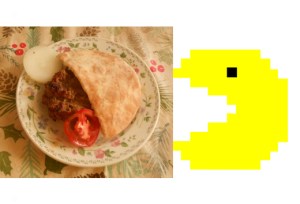
1) The Montenegrin Burger is eerily similar to the famed Pac-ManTM . Is this a case of parallel development or was one of the two inspired by the other? You decide.

– Paul De Lancey, The Comic Chef

My cookbook, Following Good Food Around the World, with its 180 wonderful recipes, my newest novel, Do Lutheran Hunks Eat Mushrooms, a hilarious apocalyptic thriller, and all my other books, are available on amazon.com.

Categories: cuisine, humor, international | Tags: , , , , , , , , , , , , , , , , , | 2 Comments

Chilaquiles

Mexican Breakfast

CHILAQUILES

INGREDIENTS

3 serrano chiles
2 tomatoes
1 green bell pepper
1 small onion
18 corn tortillas
1 cup vegetable oil
4 eggs
1 cup shredded Oaxaca or Monterrey Jack cheese
¼ cup sour cream

SPECIAL UTENSILS

food processor
8″ casserole

Serves 6. Takes 1 hour.

PREPARATION

Preheat oven to 350 degrees. Seed chiles. (Or leave seeds in for a spicier entree. Add chiles and tomatoes to food processor. Blend until tomatoes are pureed. Dice bell pepper. Mince onion. Cut each tortillas into 8 pieces.

Add oil to pan. Heat oil using medium-high heat until a little piece of tortilla in the oil starts to dance. Add tortilla pieces. Sauté for 12 minutes or until tortilla become crispy, but not burnt. Stir frequently. Remove tortillas pieces and place them on plates covered with paper towels. Add bell pepper and onion to pan. Sauté for 5 minutes on medium-high heat or until onion softens. Stir frequently. Remove bell pepper/onion mix. Add eggs to pan. Reduce heat to medium and scramble eggs until they are done to your liking.

Add ⅓ of tortilla to casserole dish, then ⅓ bell pepper/onion, followed by ⅓ egg to casserole. Smooth after each layer. Repeat 2 more times. Pour serrano chile/tomato puree over everything. Sprinkle cheese on top. Bake in oven at 350 degrees for 5 minutes or until cheese melts. Remove from over and spoon sour cream evenly over everything.

TIDBITS

1) “Chilaquiles” is an anagram of “Ah, ice quills.” Unlike their American cousins, Greenlandic porcupines have quills made from ice. These northern critters are also stupendously tasty. This is why Eskimo porcupine-hunters exclaim, “Ah ice quills,” whenever they come across ice quill remnants. And of course, it was but a matter of time before vibrant Greenlandic/Mexican chef community transformed porcupine stew into chilaquiles. Ah ice quills, indeed.

– Paul De Lancey, The Comic Chef

My cookbook, Following Good Food Around the World, with its 180 wonderful recipes, my newest novel, Do Lutheran Hunks Eat Mushrooms, a hilarious apocalyptic thriller, and all my other books, are available on amazon.com.

Categories: cuisine, history, international | Tags: , , , , , , , , , , , , , , , , , | Leave a comment

Mustard Chicken

Gabonese Entree

MUSTARD CHICKEN

INGREDIENTS

3 garlic cloves
2 onions
3 tablespoons olive oil
6 boneless chicken breasts or thighs
¼ cup lemon juice
½ cup Dijon mustard

Serves 6. Takes 50 minutes.

PREPARATION

Mince garlic cloves. Dice onions. Add oil to large pan. Heat oil using high heat until a tiny bit of onion will dance in the oil. Carefully add chicken breasts to pan. (You might need to cook in batches.) Sear chicken for 2 minutes on each side or until golden brown. Remove chicken and set aside. Keep oil.

Add garlic and onion to pan. Sauté at medium-high heat for 5 minutes or until garlic and onion soften. Stir frequently. Add garlic, onion, chicken, lemon juice, and Dijon mustard to pot. Mix with fork until well blended. Cover and simmer at low/medium heat for 25 minutes or until chicken is tender and no longer pink inside. Stir occasionally. Put chicken breast on each plate. Ladle mustard/onion sauce over chicken breasts. Goes quite well with rice.

TIDBITS

1) “Mustard” is an anagram for “Drums rat.” And it almost goes without saying that “chicken” is an anagram for “chicken.” So, “Mustard chicken” by an extension of logic, an anagram for “Chicken drums rat.” Indeed, “Chickens drum rat” is the first complete sentence in English. In fact, a newly discovered fresco at St. Camembert’s church, dating before 1000 AD, shows chicken pounding drums with their wings. Beneath the painting are the words, “Chickens drum ‘rats’.” And whenever farmers heard “rat” being drummed out, they rushed back and shooed off the ravenous vermin.

2) Unfortunately, English farmers never taught their chickens to drum out “Normans.” So when in 1066 Duke William of Normandy landed his army, a perplexed chicken sentry didn’t know what to do. Eventually, she drummed out “rat” to England’s king. King Harold Godwinson didn’t give a fig about rats and instead scurried north to defeat Harold Hardrada. Meanwhile, back on the southern English beaches, the Norman forces assembled unmolested into a coherent, compact army. The two forces met as Hastings. The tired English lost to the fresh Normans. Duke William became the new English king. However, William knew what a near-run thing his invasion had been. His barons went through the realm slaying every single chicken-drumming teacher. Now, no chicken knows how to drum. It’s a pity as the Chicken Drumming Festival at St. Albans was something to behold.

– Paul De Lancey, The Comic Chef

My cookbook, Following Good Food Around the World, with its 180 wonderful recipes, my newest novel, Do Lutheran Hunks Eat Mushrooms, a hilarious apocalyptic thriller, and all my other books, are available on amazon.com.
Categories: cuisine, international | Tags: , , , , , , , , , , , , , , , , , , , , , , , , , | Leave a comment

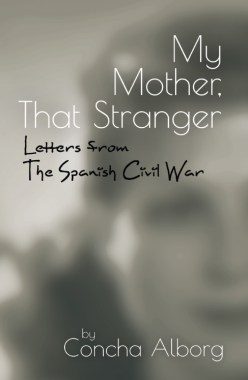
Spotlight on Concha Alborg, Author of “My Mother, That Stranger. Letters from the Spanish Civil War”

About the book


Over eight-hundred letters were written between the author’s newly-engaged parents during the time that her father was on the Republican war front fighting against Franco’s forces, and her mother awaiting the end of the war. Her father, Professor Juan Luis Alborg, would live to become a well-known literary historian and critic. Her mother’s life, on the other hand, was overshadowed by her husband’s academic celebrity. The letters were discovered whilst preparing for a symposium marking the centenary of her father’s birth, celebrated at the University of Malaga in 2014

This unique memoir is a microhistory of the Spanish Civil War at an individual level; it illuminates the ‘official story’ as told in history books at multiple levels. Her mother’s personal narrative adds to the understanding of this significant time because she shows how a family lived in the midst of war. A primary relevance is that she lived in Valencia, which in November 1936 become the official capital of the Republican government. Working in a government co-op gave her an insider’s view of the ongoing political and military situation. She describes the contrasting burdens between family life in Valencia, and the life of her fiancé soldier on the southern frontlines. The author’s mother is exemplary of the women who were formed under the liberal Second Spanish Republic (1931–39) only to be silenced during Franco’s repressive dictatorship (1939–75). The long-lost letters made Concha Alborg realize how little she understood her mother’s passion to set down complex feelings in the most difficult of circumstances. My Mother, That Stranger will be of interest to Hispanists, historians and literary critics for its uniqueness on the epistolary genre and gender studies, and to the general public as a heartfelt family memoir.


Excerpt From My Mother, That Stranger. Letters from the Spanish Civil War


In this memoir My Mother, That Stranger. Letters from the Spanish Civil War, Concha Alborg included recipes from her family in Spain. Today, we would like to share one with you.

“Rollitos;” Christmas Anisette Cookies:

All the entries in my mother’s recipe notebook are of desserts; there is not a single one of her savory dishes. The recipes are written neatly, underlined with red ink and they encompass a life trajectory of sorts. There are several from the old Alborg aunts, Isabel and Vicenta, some from her Spanish friends, all the way to my recipe for sherry cake and another for chocolate chip cookies, written in English! My mother never ceases to surprise me. It is interesting that she would take the time to write down these recipes, but not any of the meals she was best known for. It is as if she believed that cooking is an art and baking a science. She did not need to record her masterpieces, but needed the exact ingredients of the sweet treats, although she wrote “as much flour as needed” for the “rollitos.”

Growing up we seldom had sweet desserts. Fruit was served at the end of each meal, but cakes and cookies were reserved for holidays, such as the Saints’ Days and birthdays. Only at Christmas time did we have special treats of almond nougat and marzipan. “Meriendas” (a late afternoon or early evening snack) were usually made up of a sweet roll or a croissant, but those were store-bought. As children we usually had plain bread with some chocolate and a glass of milk, nothing more.

She made “rollitos” in early December for our Saint’s Day on the 8th and the leftovers were reserved for Christmas. They were and still are my favorite cookies ever! Their liqueur smell permeated the house and when I was a little girl, I could smell them the minute I stepped out of the elevator. The recipe I have in my mother’s handwriting with red ink on a 3 X 5 card is yellowed and stained, but I would never think of copying it anew.

I started making them as a young bride and continued doing so religiously after my daughters were born. I was glad that most of my friends and in-laws found them strong and strange and preferred the traditional American sugar cookies for Christmas, the more for me to savor. I know that making “rollitos” is a tedious job. They take a minimum of two hours and they are all rolled by hand in small donut-like circles the size of a ring. They are dipped in sugar, which makes one’s hands sticky and you need to wash them often. When I was little, I liked them best eaten warm and I was supposed to wait until they cooled down or I would get a stomach ache. But I found out that it was not true, because once I ate at least a baker’s dozen (an expression in English I love and we do not have in Spanish) when the “rollitos” had just come out of the oven and absolutely nothing happened to my stomach.

Diana, my oldest, learned to make them early and I thought she was a fan until the day that she took the dough and made one huge “rollitón” announcing: “Here, I’m done.” Luckily, her sister was old enough to take over and, again, I thought she enjoyed the family tradition, only to find out that she hated making them too and did not like eating them, even if they were warm. When my daughters grew up and left the nest, I found friends and neighbors to join me making them. I soon got the feeling as soon as the first Christmas songs were heard, that no one wanted to see me, and they would disappear from my kitchen with the excuse of being really busy. My late husband Peter, despite his serious character faults, was very helpful in the kitchen and a fellow “rollito” lover and made them with me for years. In desperation, during my years as a widow, I have recruited unsuspecting boyfriends to bake with me with the expectation of perhaps winning my heart, which has not happened yet.

As we know, life can have very sweet surprises and now I have two lovely twin granddaughters who enjoy making “rollitos” with me, I think. At least they humor me as long as I make them a “tortilla de patatas” in return, a potato omelet, which they love. Having two helpers instead of one makes it more efficient. Actually, I have doubled the recipe since now the three grandchildren expect their own tin of “rollitos” to take home. The twins are amazing. They have figured out that one rolls out the dough and the other dips “rollitos” in sugar, which saves with the hand washing. They know how to charm me and speak Spanish during our baking day. One year, when they were in the “fighting-with-each-other phase,” I allowed them to insult each other as much as they wanted as long as they used the affirmative and negative commands in Spanish, which are so tricky to learn. There is nothing like being a retired professor and a grandmother to come up with this trick!

Here is the recipe:

INGREDIENTS

1 cup virgin olive oil
1 cup anisette
1 cup sugar and more for dipping
2 eggs
1 teaspoon lemon zest
2 teaspoons baking powder
Flour, as much as needed (about six cups)

METHOD

In a large bowl, combine the oil, anisette, eggs and sugar. Add the lemon zest and the baking powder. Add the flour little by little until it becomes manageable and it can be kneaded on the counter.

Form rings of half an inch-size wide dough. Dip them in sugar before baking. Bake in a 325-degree oven for 20 minutes. The bottom should be golden brown.

Makes about five dozen.


Bio


Dr. Concha Alborg was born in Valencia and grew up in Madrid. She has lived in the United States since the 1960s. She received a Masters from Emory University and a Ph.D. from Temple University. She was a professor of contemporary Spanish literature at Saint Joseph’s University, Philadelphia. Some of her academic publications include: Cinco figuras en torno a la novela de posguerra, a critical edition of Caza menor, and Temas y técnicas en la narrativa de Jesús Fernández Santos. Her fiction and creative non-fiction publications are detailed on the press website.

*********************************

Paul De Lancey

http://www.pauldelancey.com

Categories: book reviews and excerpts | Tags: , , , , , , , , , , , , , , , | 2 Comments

Bunny’s Feast

Bunny Entree

BUNNY’S FEAST

INGREDIENTS

1 large carrot
½ Roma tomato
3 tablespoons raisins.

Serves a bunny family. Takes 5 minutes.

PREPARATION

Break carrot into 2 or 3 pieces. Dice Roma tomato. Do nothing to raisins. Place carrot pieces, diced Roma tomato, and raisins on separate flat surfaces. The separation of ingredients allows the bunnies to create their own three-course meal.

The best time for the bunny feast is just before dusk when it’s dark enough for our furry friends to feel safe and light enough for us to see.

TIDBITS

1) The Chinese dedicate every twelveth year to the rabbit. The Aztecs held that the Centzon Totochtin (say that quickly) are 400 rabbit gods who party all the time. They are the gods of drunks. Ancient Asians believed a rabbit lived on the moon with its friend the moon goddess. Nanabhozo was a Native American creator god who liked to appear as the Great Rabbit.

2) Crusader Rabbit appeared on early television as a force for good. The kindly Velveteen Rabbit appeared in books. Peter Rabbit delighted kids for decades.

3) However, we spurned the good lapins of literature for less savory rabbits. Brer Rabbit and Bugs Bunny were tricksters. To be fair, Bugs Bunny did promote war bonds during World War II.

4) Bunnicula, of literature fame, sucked juice from carrots while the movie, Curse of the Were-Rabbit showed these furry creatures to be other worldly.

5) Rabbits turned deadly in Monty Python and the Holy Grail. “That’s no ordinary rabbit.” 1972’s horror flick, Night of the Lepus treated viewers to thousands of mutated rabbits killing and eating the inhabitants of small towns along their Chicago. Spoiler alert, Chicago survives.

6) See? Even the nicest of rabbits can go rather bad without attention. Go to the library with your kids. Check out Peter Rabbit books. Do it today. Civilization hangs in the balance.

– Paul De Lancey, The Comic Chef

My cookbook, Following Good Food Around the World, with its 180 wonderful recipes, my newest novel, Do Lutheran Hunks Eat Mushrooms, a hilarious apocalyptic thriller, and all my other books, are available on amazon.com.
Categories: cuisine | Tags: , , , , , , , , , , , , , , , , , , , , , | 4 Comments

Risotto

Italian Appetizer

RISOTTO

INGREDIENTS

5½ cups chicken broth
2 garlic cloves
1 onion
2 tablespoons fresh Italian parsley, or oregano
2 tablespoons olive oil
2 cups Arborio* rice
½ cup dry white wine
¾ cup shredded Parmesan cheese
3 tablespoons butter

* = The properties of Arborio are important to this dish. The best substitute for Arborio is Carnaroli, with regular short-grain rice to be used only in a pinch.

Serves 10 or 5 if served as an entree. Takes 45 minutes.

PREPARATION

Add chicken broth to pot. Simmer at warm heat. While broth simmers, mince garlic cloves and onion. Dice Italian parsley. Add garlic, onion, and olive oil to pan. Sauté at medium-high heat for 5 minutes or until onion softens. Stir frequently

Add rice. Reduce heat to medium. Sauté for 3 minutes or until rice smells toasty and turns translucent. Stir frequently, making sure rice is thoroughly coated with olive oil. Add wine. Sauté until rice absorbs all the liquid. Stir frequently. Add broth 1 cup at time. Stir gently after each addition until the rice absorbs the broth. This should take about 25 minutes with the rice being creamy and al dente, just a little bit firm. Remove from heat and gently stir in butter and Parmesan cheese. Garnish with Italian parsley. Serve immediately.

TIDBITS

1) Karl Marx visited lovely Florence in 1848. While waiting forever for an espresso, Crabby Karl listened as workers at the next table complained loudly and endlessly about the oppressive Austrian rule over their city. His patience exhausted, he yelled at the workers, “So, riot.” They did. Fortunately, the chef had been whipping up a new rice dish. He served the workers just as they were about to go and throw bricks at the constabulary. The workers loved their risotto. They completely lost their urge to run amuck. The anagramist among them said, “no ‘so, riot.’” He lifted up his bowl of rice. “Risoto.” A typo turned that into “Risotto. Oh, and Karl would go on to other things.

– Paul De Lancey, The Comic Chef

My cookbook, Following Good Food Around the World, with its 180 wonderful recipes, my newest novel, Do Lutheran Hunks Eat Mushrooms, a hilarious apocalyptic thriller, and all my other books, are available on amazon.com.
Categories: cuisine, history, international | Tags: , , , , , , , , , , , , , , , , , , , , | 2 Comments

Create a free website or blog at WordPress.com.