Posts Tagged With: entree

Avocados With Tuna

Bissau Guinean

AVOCADOS WITH TUNA
(Abacate Com Atum)

INGREDIENTSavocadoswithtuna

2½ tablespoons freshly * grated coconut (9½ tablespoons more later)
2 large or 4 small ripe avocados
1 6-ounce can tuna
9½ tablespoons freshly grated coconut
1 cup heavy cream
3 tablespoons tomato sauce
⅛ teaspoon pepper
½ teaspoon salt
1½ tablespoons lemon juice

* = Add small amounts of water to dry, shredded coconut until it softens. It is an effort to get the fresh coconut flesh from inside the coconut. Sorry.

Makes 4 large or 8 small stuffed avocados halves Takes 20 minutes.

PREPARATION

Add 2½ tablespoons grated coconut to pan. Toast on high heat for 3 minutes or until coconut starts to brown. Stir occasionally. Cut avocados in half lengthwise. Remove pit. Gently scoop out pulp with spoon. Don’t tear the avocado shells. Add avocado pulp to large mixing bowl. Mash avocado with fork. Drain tuna. Add tuna, 9½ tablespoons grated coconut, heavy cream, tomato sauce, pepper, and salt. Mix with whisk or fork until well blended. Fill avocado half shells with avocado/tuna mix. Drizzle avocado/tuna mix with lemon juice. Garnish with toasted coconut.

TIDBITS

1) This recipe calls for shredded coconut to be toasted in a pan. Wouldn’t it be easier to toast the shredded coconut in a toaster? Yes, it would. Unfortunately, the tiny shreds would get everywhere, including on the toaster’s live coils. A fire could result, a raging inferno even. That would be bad. Your newly homeless neighbors would hate you.

2) That’s why I’m developing the Shredded-Coconut ToasterTM. Simply distribute the coconut one shred to one tiny slot. Wouldn’t that requires a lot of slots in the toaster? Yes, it would.

3) Another invention of mine would be the Egg Centrifuge CookerTM. Simply place an egg into the centrifuge. The centrifuge whips the egg around at incedible speeds, scrambling the inside. Coils inside the centrifuge cooks the egg’s inside to your desired level of doneness. No more tiresome scraping and scrubbing of burnt egg bits stubbornly attached to your skillet.. You’ll say, “Thank you, Egg Centrifuge Cooker.”

– Paul De Lancey, The Comic Chef

My cookbook, Following Good Food Around the World, with its 180 wonderful recipes, my newest novel, Do Lutheran Hunks Eat Mushrooms, a hilarious apocalyptic thriller, and all my other books, are available on amazon.com.

Categories: cuisine, international | Tags: , , , , , , , , , , , , , , , , , | Leave a comment

Piragi

Latvian Entree

PIRAGI

INGREDIENTS – DOUGHpiragi

⅓ cup warm water
1 teaspoon sugar (3½ more tablespoons later)
2 tablespoons yeast

¾ cup butter
1½ cups milk
1 teaspoon salt
3½ tablespoons sugar
1 egg yolk (1 entire egg later)
1 tablespoon sour cream
5 cups flour (2 more tablespoons later)

INGREDIENTS – FILLING

1 pound bacon
1 small onion
1 tablespoon vegetable oil
¼ teaspoon pepper
½ teaspoon salt

INGREDIENTS – ASSEMBLY

2 tablespoons flour
1 egg

SPECIAL UTENSILS

2 cookie sheets
pastry brush
parchment paper

Makes 30. Takes 3 hours.

PREPARATION – DOUGH

Add 1 teaspoon sugar and warm water to mixing bowl. Whisk until sugar dissolves. Sprinkle yeast over sugary water. Let sit for 10 minutes or yeast becomes foamy.

While yeast foams, add butter to small pot. Melt butter using medium-high heat. Add milk, salt, and sugar. Heat until milk is almost ready to boil. Stir constantly. Remove from heat.

Add milk mixture into mixing bowl with yeasty water. Add egg yolk and sour cream. Gradually add flour. Blend with electric beater set to low until dough forms. Cover bowl with thin towel and let sit for 1½ hours.

PREPARATION – FILLING

While dough rises, dice bacon and onion. Add vegetable oil, bacon, and onion to pan. Sauté at medium-high heat for 5 minutes or until onion softens. Stir frequently. Add pepper and salt. Remove from heat and let cool in refrigerator for 10 minutes.

PREPARATION – ASSEMBLY

While dough rises and filling cools, knead dough by hand or by bread machine for 20 minutes or until dough is elastic. Dust roller and flat surface with 2 tablespoons flour. Add dough to flat surfarce. Roll out dough until it is ¼” thick.

Preheat oven to 400 degrees. Separate egg. Make 3″ circles in dough. A drinking glass works well for this. Add 1 teaspoon to center of dough circle. Brush a thin strip of egg white along edges of dough circle. Fold dough circle in half. Use tip of fork to seal edges together. Repeat until all dough and filling is used. These are the piragi.

Put parchment paper on cookie sheets. Place piragi on parchment paper. Beat egg yolk with fork or whisk. Brush egg yolk over piragi. Heat oven to 400 degrees. Bake for 12 minutes or until piragi turn golden brown

TIDBITS

1) “Piragi” is an anagram for “Air Pig.” It’s a hidden bit of history, but many of our commercial planes were once flown by pigs.

2) Oil prices soared during the Oil Embargo of 1973 So did the price of aviation fuel. Airlines became frantic in their search to reduce fuel costs. One way was to reduce of a fully-loaded plane. So, for a brief time, stewardesses threw passengers out the emergency door, starting with those who didn’t listen to the pre-flight safety instructions. The technique worked! Fuel costs plummeted.

3) So did ridership. A dead passenger is not a return passenger. Plus, people became skittish about booking a flight when it might mean being ejected over the Atlantic. Passengers became downright resentful toward stewardesses. Indeed, the very word “stewardess” became a curse word. This is the reason they are now called flight attendants. It’s kinda like calling used cars “pre-owned.”

4) The average feral pig weighs 125 pounds. (Only wild pigs can be trained to fly jets. Who knew?) The average man tips the scale at 170. A small difference to be sure, but enough over the course of millions of flights to cut fuel costs to the point of keeping air travel economically viable. Whew.

5) Unfortunately, the pig pilots buzzed workers at pork rendering plants. In 1974 alone, four crashes resulted from such behavior. This being the 70s, airlines listened to customer concerns and fired their pig aviators. There are persistent whispers, however, that shadowy governmental agencies still employ pig pilots in covert operations. These critters are tough. Don’t discuss bacon around them.

– Paul De Lancey, The Comic Chef

My cookbook, Following Good Food Around the World, with its 180 wonderful recipes, my newest novel, Do Lutheran Hunks Eat Mushrooms, a hilarious apocalyptic thriller, and all my other books, are available on amazon.com.

Categories: cuisine, history, international | Tags: , , , , , , , , , , , , , , , , , , , , , , , , , | 2 Comments

Chicken Vindaloo

Indian Entree

CHICKEN VINDALOO

INGREDIENTS – MARINADEchickenvindaloo

3 garlic cloves
1½” ginger root
3 medium tomatoes
¾ teaspoon cayenne pepper
1 teaspoon cinnamon
½ teaspoon ground cloves
½ teaspoon coriander
1 teaspoon cumin
4 teaspoons garam masala
1 teaspoon paprika
½ teaspoon pepper
1 teaspoon salt
½ tablespoon turmeric
1 tablespoon water
2 tablespoons white vinegar (2 more tablespoons later)

INGREDIENTS – OTHER

2 pounds boneless chicken thighs
2 medium potatoes
3 medium onions
2 tablespoons ghee or vegetable oil
2 cups chicken broth
2 tablespoons white vinegar

SPECIAL UTENSIL

blender

Serves 6. Takes 3 hours.

PREPARATION

Add all marinade ingredients to blender. Blend on medium setting until smooth. This is the marinade. Cut chicken thighs into 1″ squares. Add marinade and chicken squares to large mixing bowl. Mix until chicken is well coated. Cover and marinate in refrigerator for 2 hours.

While chicken marinates, peel potatoes. Cut potatoes into ½” cubes. Mince onions. Add ghee and onion to large pot. Sauté at medium-high heat for 5 minutes or until onion softens. Stir frequently. Add marinated chicken. Cook for 5 minutes on medium-high heat. Stir occasionally. Add potatoes, chicken broth, and 2 tablespoons white vinegar. Bring to boil using high heat. Reduce heat to low. Cover and simmer for 50 minutes or until potato is tender. Goes well with rice.

TIDBITS

1) After 75 years and invoking Crown Really Official Secrets (CROS), I can finally tell the heroic story of Mrs. Linda Voo.

2) It was 1941. The Battle of Britain was over. The Nazi air fleet had failed in its attempt to bomb the British people into submission. It was time to take the war to the German aggressors. But how? The British army was minuscule compared to Germany’s and had no way to land on the continent. Aha, by air! The British Air Royal Force, BARF, would attack the Hun’s war factories by air.

3) Though there was that delay when Winston Churchill secured the regisnation of the dyslexic Sir Orbert Abcon from the War Nimistry. It took over a month to correct the names he misspelled. Later that year, the newly renamed RAF commenced a massive bombing campaign of Berlin and the industrial centers of the Ruhr Valley.

4) What the bombers actually destroyed were a modern-art school–amazingly still thriving in Hitler’s Germany, but then again the Fuhrer was a frustrated art student and who knew he cottoned to modern art?–and two-dozen pig farms–the German war machine loved pork.

5) Take a deep breath to recover from the run-on sentence of the previous tidbit.

6) The continued futility of the RAF’s bombing campaign went on for months. Then in November, 1941, Lieutenant Nigel Voo failed to come back from a raid. The squadron was supposed to blow up a ball-bearing plant in Hamburg. Instead the heroic Voo and his crew were shot down after dropping bombs on nearby Anfurt’s annual ParcheesiTM tournament.

7) This tragedy enraged his wife, Linda, a tea lady at Biggins Hill airbase. She threw her teapot to the ground and shouted at the airmen, “You bloody idiots. You couldn’t find your way to a cod-and-chips store if you were standing in front of it. The Three Blind Mice have nothing on you lot.”

“Well now, see here, Mrs. Voo, those are unkind words, they are. We get lost, we do. It’s tough reading a map and trying to see landmarks especially at night,” said the squadron leader.

“Too right, you get lost, you ninnies. Why don’t you ask for directions?”

“Well, mum, we’re men. We don’t like to ask for directions. I mean they’re the enemy and were are flying thousands of feet above the ground. We couldn’t ask even if we wanted.”

“‘Tis bloody possible. I’ll show the likes of you.”

8) And she did. She flew in the lead plane. Whenever the squadron got lost, Mrs. Voo bungee jumped out the plane and asked a local farmer for directions. Sure, there was a war of annihilation going on, but German farmers always act courteous to any lady who drops in. The RAF’s bombers never missed a target what with Mrs. Voo and a thousand others like her flying with them . Germany was doomed.

9) Mrs. Voo’s code name was the anagram, Vindaloo. The British government even created an entree in India with that name just to provide cover.

– Paul De Lancey, The Comic Chef

My cookbook, Following Good Food Around the World, with its 180 wonderful recipes, my newest novel, Do Lutheran Hunks Eat Mushrooms, a hilarious apocalyptic thriller, and all my other books, are available on amazon.com.

Categories: cuisine, history, international | Tags: , , , , , , , , , , , , , , , , , , , , , , , , , , , , , | Leave a comment

Shrimp Fried Rice

Chinese Entree

SHRIMP FRIED RICE

INGREDIENTSshrimpfriedrice

1 cup rice
2 medium carrots
1″ ginger root
2 stalks green onions
2 eggs
½ tablespoon sesame oil (1 more tablespoon later)
1 tablespoon sesame oil
2 tablespoons soy sauce
¼ teaspoon pepper
¼ teaspoon salt
2 tablespoons canola oil or olive oil
¾ pound medium shrimp, peeled and deveined
½ cup snow peas or snap peas

SPECIAL UTENSILS

food processor or grater
spice grinder
wok or skillet

Serves 4. Takes 35 minutes

PREPARATION

Cook rice according to directions on package. Grate carrot using food processor or grater. Grind ginger root in spice grinder. Dice green onions.

Add eggs to small mixing bowl. Whisk eggs. Add 1 tablespoon sesame oil to wok. Heat oil with medium-high heat until a tiny bit of egg dances in the oil. Add eggs. Sauté egg for 1 minute. (Do not stir.) Flip egg over with spatula. Add egg to flat surface. Cut egg into ¼” wide strips.

Add 1 tablespoon sesame oil, soy sauce, pepper, and salt to mixing bowl. Blend with whisk or fork. Add canola oil to wok. Heat on medium-high heat until tiny bit of ginger dances in the oil. Add shrimp. Sauté shrimp for 2 minutes or until shrimp turns pinkish orange. Stir and flip shrimp occasionally. Remove shrimp and set aside. Keep canola oil. Add ginger, carrot, and snow peas to wok. Sauté on medium-high heat for 5 minutes or until carrot and snow peas soften. Stir frequently.

Add egg strips, rice, green onion, sesame oil/soy sauce mixture to wok. Sauté on medium heat for 3 minutes. Stir frequently. Add shrimp. Stir. Serve in bowls immediately.
TIDBITS

1) The children’s game, CandylandTM, was invented way back when in prehistoric times by Philippe and Miriam Davout. The Davouts were devoted parents and persistent entrepreneurs. Hence, the saying that’s been passed down through the millennia, “As loving as a Davout hug. As novel as Davout fire.” Another stone-age adage that we know is, “As ugh as Ogg’s mastodon mignon.” But Chef Ogg deserves his own tidbit series after a recipe and so we return to the Davouts.

2) Anyway, little Yvette Davout didn’t have much to do. She had no school to go to. And what would the teacher have taught her? “Stay inside your cave. The pumas lurking outside will eat you.” That’s it. Her parents taught her. No need for school.

3) This attitude persists to this day. However, the truth be told, not many people nowadays do not get eaten, or even seriously challenged, by pumas. So, this view is kinda hard to challenge.

4) Meanwhile back at the cave, Yvette fussed and fussed. She couldn’t go out to see the Murat sisters. And after, their daughter Lucy got eaten by pumas, Daddy and Mommy Murat wouldn’t let their remaining girls visit Yvette anymore.

5) It got hot during Olduvai Gorge summers, particularly in a cave. Sweat rolled down Yvette’s sloped forehead like Eddie the Eagle doing a ski jump. She needed a distraction before she went stir crazy and ran outside to eaten by pumas.

6) Then one glorious noon, a thought, the first of the day, popped into Miriam’s head. She explained it to Philippe. He smiled. “Yo ho, Miram, that a’s glorious idea, wife.” They chattered excitedly about rules, then stopped abruptly. Miriam slapped her head with a rock. It didn’t hurt, her skull was thick. Cave folk did this all the time.

7) Miriam, having waited for the author’s intrusion to stop said, “Boo hoo, we don’t have the requisite technology to fabricate the many colors needed to paint this game’s playing cards.”

8) That was quite a complex statement for the time. Philippe, having neither a dictionary nor even a ThesaurusTM, had to guess at its meaning. Then he too smashed something to his head. It was a large chunk of obsidian. It splintered into nice sharp dice-like cubes.

9) The Davouts looked at each other. Light bulbs, at once a metaphor and an artifact, lit up above their heads. “Let’s make dice–the first use of this word–out of these, these DICE,” said Philippe and they did. They finished the game lickety split.

10) Little Yvette loved the game. She played it and played it until the sharp edges of the obsidian dice sliced off too many of her fingers. Distraught and bored, she took up painting. It was tough painting with two fingers on her hand, hence the crudely shaped hunters and mastodons we see depicted in the Lascaux caves.

11) Yvette eventually gave her dice to her own daughter, Sabine. Sabine too was forbidden to go outside the cave or to play bloody Candyland. She took to cooking instead. Being smart like all dawn-of-humanity Davouts, Sabine took to chopping onions with her Candyland dice. She called this technique dicing and so do we. There you go.

– Paul De Lancey, The Comic Chef

My cookbook, Following Good Food Around the World, with its 180 wonderful recipes, my newest novel, Do Lutheran Hunks Eat Mushrooms, a hilarious apocalyptic thriller, and all my other books, are available on amazon.com.

Categories: cuisine, history, international | Tags: , , , , , , , , , , , , , , , , , , , , , , , | Leave a comment

Carnitas

Mexican Entree

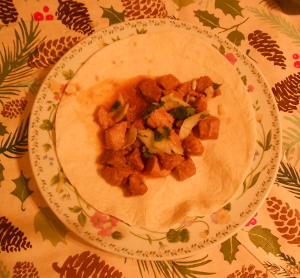
CARNITAS

INGREDIENTScarnitas

4 pounds boneless pork shoulder or loin
1 teaspoon chili powder
1 teaspoon cumin
1 teaspoon oregano
½ teaspoon salt
2 teaspoons lime juice

1 large onion
½ cup fresh cilantro
¼ cup orange juice

3 garlic cloves
1 medium onion
1 orange
¾ cup shortening or lard
8 9″ or 20 5″ flour tortillas

SPECIAL UTENSIL

Dutch oven

Makes 8 or 16 carnitas depending on size of tortillas. Takes 3 hours 30 minutes.

PREPARATION

Chop pork into 1″ cubes using cleaver. Add pork, chili powder, cumin, oregano, salt, and lime juice to large mixing bowl. Turn pork cubes until they are well coated. Cover and let marinate for 30 minutes.

While pork marinates, dice small onion and fresh cilantro. Add diced onion, cilantro and orange juice to small mixing bowl. This is your salsa.

Mince garlic cloves. Cut medium onion into slices ¼” thick. Separate orange into sections. Add shortening to Dutch oven. Melt shortening using medium-high heat. Add marinated pork, garlic, sliced onion, and orange sections. Cook on medium-high heat for 15 minutes or until pork cubes brown on all sides. Stir frequently. Cover Dutch oven and reduce heat to low and simmer for 1½ hours or until pork cubes are tender to the fork. Stir every 5 minutes.

Uncover Dutch oven. Continue to simmer pork/veggies for another 30 minutes or until most of the liquid has evaporated or been absorbed. Microwave all tortillas for 30 seconds. Top each tortilla with an equal amount of pork/veggies and salsa.

TIDBITS

1) It seems hard to believe, but culinary historians assure us that cars were once made with carnitas. It’s true, carnitas is an anagram for satin car.

2) It all goes back to 1910 and Mexico. The tightly knit Mexican aristocracy monopolized the nation’s political power, wealth, and satin. Black satin dresses were all the rage among high society. No wealthy woman would think of appearing in public without one. That was fine. That left just satin for peasant women to wear on weddings, bar mitzvahs, and the such.

3) Then in early 1910, Doña Josefa Enero regarded her Allis Chalmers with disdain. Although her motorman kept the car purring and shiny, something was missing. Something that made her embarrassed to be riding in it in public.

4) “Cinco albondigas!” she shouted. The car was made of metal! A true lady with Spanish blood could not been seen wearing a metallic vehicle. Satin! Satin! She needed to be clothed in a satin car.

5) So, the Eneros ordered a satin car for everyone in their family. Their neighbors, the Tortas, the Flans, and the Ceviches did as well.

6) Naturally, with the whole Mexican elite making their cars out of satin, there was no material left for the peasantry.

7) No satin for the peasantry. No weddings. No bar mitzvahs. No docile peasantry.

8) One evening in early 1910, an angry Nita Menudo dipped six habañero peppers in Doña Febrero’s tea before serving. Her mistress’ mouth erupted in fire. She slapped Nita. Nita ran crying all the way home.

9) Her irate husband, Roberto, took to the hills. Realizing that was useless, he came back.

10) “I will avenge you!” he roared. He clutched a knife and headed to the Febrero estate. The Revolution of 1910 – 1930 had begun.

11) It was a long walk–Nita was always driven–and by the time he got there, he was too tired to attack anyone. He limped home in shame. “We need transportation,” said Roberto’s astute neighbor, Ernesto Flautas, “if we wish to launch raids against our greedy pig masters.”

12) “O drato,” said Roberto, “we have no money to buy metal to make a car. Ai, yi, yi.”

13) “Que frijoles you are,” said Nita. “We have vast herds of wild pigs destroying our crops. Slaughter the pigs and let the meat bake in the hot sun until it becomes tough as metal. Then you make your cars. Then you can attack the rich. Then we can be free.”

14) So, the Mexican peasants made car out of pork. The people called the car “Nitas” after the woman who hatched the idea. Hence, “carnitas.”

15) The Revolution would rage for twenty years. This dish was created to honor the car that won it.


– Paul De Lancey, The Comic Chef

My cookbook, Following Good Food Around the World, with its 180 wonderful recipes, my newest novel, Do Lutheran Hunks Eat Mushrooms, a hilarious apocalyptic thriller, and all my other books, are available on amazon.com.

Categories: cuisine, history, international | Tags: , , , , , , , , , , , , , , , , , , , , | 2 Comments

Shrimp And Grits

American Entree

SHRIMP AND GRITS

INGREDIENTSshrimpandgrits

1 cup chicken broth
¾ cup milk
2½ cups water
1 cup grits
¼ teaspoon pepper
½ teaspoon salt
3 tablespoons butter
1¾ cups grated Cheddar cheese
1 garlic clove
4 stalks green onions
5 bacon strips
1½ pounds shrimp, peeled and deveined
1½ tablespoons lemon juice

Makes 4 bowls. Takes 45 minutes.

PREPARATION

Add chicken broth, milk, and water to large pot. Bring to boil using high heat. Stir frequently. Add grits gradually, stirring with whisk until no lumps exist. Add pepper and salt. Reduce heat to warm. Simmer to 10-to-20 minutes or until grits become tender and all the water has been absorbed. Stir occasionally. Remove from heat and add butter and Cheddar cheese. Blend in cheese and butter with fork. Cover.

While liquid boils and grits become tender, mince garlic and dice green onions. Chop bacon into ½” squares. Add bacon squares to pan. Cook at medium-high heat for 3-to-5 minutes or until bacon becomes crispy, turning them over at least 1 time. Remove bacon and place on paper towel. Keep bacon grease in pan.

Add shrimp to pan. Sauté shrimp for 3 minutes at medium heat or until they start to turn pink or orange. (Don’t overcook shrimp. It will get mushy.) Add lemon juice. garlic, and green onion. Stir quickly until shrimp is well coated with garlic and green onion. Remove from heat.

Ladle grits into bowls. Top with shrimp and garlic/green onion/lemon juice. Sprinkle with bacon squares.

TIDBITS

1) It seems hard to believe now, but shrimp portraits were once quite popular in America during the late nineteenth century.

2) Darned difficult. I mean, why?

3) Okay, to understand phenomenon, one simply must read, Dr. Amos Keeto’s enthralling work, “Amazing Fads of the Gilded Age,” Garlic Press, Paducah, Kentucky, 1933.

4) According to Dr. Keeto, horse racing was incredibly popular in the 1890s. People with too much money, having bought up anything of any value in America, turned to gambling. They wouldn’t bet on baseball. Ordinary folk did that.

5) So the filthy rich, so called because oil from their wells constantly spurted onto their clothes, would clean up and go the race tracks to wager on horses, the sport of kings.

6) Everything went well. The had fun playing the horses. They lost vast sums, of course, but they had vast sum to lose. The race course owners became quite wealthy as well. They purchased gigantic mansions and went on railroad buying sprees. The Race Track magnate, Silas Brunswick, even bought BrusselsSproutsTM for $250,000 after it came out with the BS PadTM.

7) The BS Pad, a precursor to iPhonesTM, tablets, and the such, consisted of two tin cans tied together with a string, an abacus, and a sketch pad. Improvements have been made since then. Nevertheless, it was all new back then and the sexy BS was all the rage

8) But the craze stopped a scant year later when all of a sudden shouting became socially acceptable once more.

9) Then horse racing died out. On May 5, 1897, the swiftest horses gathered for the prestigious Mississippi Derby in Biloxi. Society’s elite bet over a million on the horses. The favorites were Southern Boil and Sandstorm.

10) People still debate what happened. As the horses turned the corner to enter the final stretch, an enormous fog rolled into. When the fog had lifted, all of the horses were gone. Everyone.

11) Where had they gone? Some speculated that the horses had gone to the same parallel universe that orphan socks go to when placed in a dryer. Some folks dispute this, noting electric dryers weren’t invented back then. The proponents counter, “Where you there, na, na, na, na, poo, poo?”

12) Some folks say that a mare in heat passed by the track and that time and the stallions merely left the race to chase after her. Still others maintain mass spontaneous combustion claimed all the horses, ignoring the fact that no explosions were ever heard. I mean, really.

13) We’ll never know what happened to the race horses. The race-track owner claiming that since no horse crossed the finished line, paid off none of the bets. This defiant act angered the wealthy bettors. Horse racing rapidly fell out of favor.

14) Fortunately, the crowd spied a cocktail of shrimp–you know, like a pod of whales–swimming off shore, and fast! An energetic entrepreneur, his name is lost to history, improvised a shrimp race course. By heavens, the event was fun. Shrimp racing became the most popular social event of the 1890s.

15) Breeding shrimp for speed became a lucrative business. Wealthy owners hired artists to paint their prize shrimps. These artists loved to eat grits. Hence, shrimp and grits. There you go.

– Paul De Lancey, The Comic Chef

My cookbook, Following Good Food Around the World, with its 180 wonderful recipes, my newest novel, Do Lutheran Hunks Eat Mushrooms, a hilarious apocalyptic thriller, and all my other books, are available on amazon.com.

 

Categories: cuisine, history | Tags: , , , , , , , , , , , , , , , , , , , , , , , , , , , , , | Leave a comment

Stuffed Cabbage Rolls (Golumkies)

Polish Entree

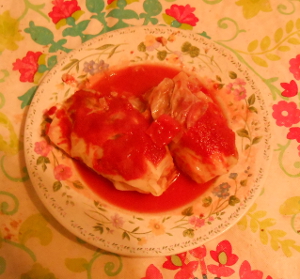
STUFFED CABBAGE ROLLS
(Golumkies)

INGREDIENTSstuffedcabbage

1 medium cabbage head
½ cup rice
3 garlic cloves
1 small onion
2 tablespoons olive oil
1 egg
1 pound ground beef
½ pound ground pork
¼ teaspoon sweet basil or basil
1 teaspoon paprika
1 teaspoon parsley
¼ teaspoon pepper
1 tablespoon sugar
1½ cups tomato sauce
½ cup diced tomatoes
1 tablespoon white wine vinegar or vinegar

SPECIAL UTENSILS

9″ x 13″ casserole dish
8-quart pot
x-ray vision
kitchen scissors

Makes 12 cabbage rolls. Takes 2 hours.

PREPARATION

Add cabbage head to 8-quart pot. Add enough water to cover cabbage. Bring to boil using high heat. Boil for 15 minutes or until leaves are soft and pliable enough to be removed easily. Remove cabbage from pot. Let sit until leaves are cool enough to be removed by hand. Drain cabbage. Remove and reserve damaged outer leaves. Carefully remove 12 leaves. Snip off the top part of the large spines on the cabbage leaves. This will make folding the cabbage rolls easier.

While cabbage boils, cook rice according to instructions on package. Dice garlic and onion. Add garlic, onion, and olive oil to pan. Sauté at medium-high heat for 5 minutes or until garlic and onion soften. Beat egg in small bowl with whisk.

Add garlic, onion, rice, egg, ground beef, ground pork, sweet basil, paprika, parsley, and pepper to large mixing bowl. Mix ingredients with hands until well blended. Place 1/12 of the rice/meat mixture in the lower, middle part of a boiled cabbage leaf. Fold the sides of the leaf over the rice/meat mixture. Roll up the leaf from the bottom to make a cabbage roll. Repeat for the other 11 leaves.

Preheat oven to 350 degrees. Add sugar, tomato sauce, diced tomatoes, and white wine vinegar to mixing bowl. Mix with whisk. Place damaged outer cabbage leaves on the bottom and on the sides of casserole dish. (This helps prevent the cabbage rolls from burning.) Place cabbage rolls seam side down in casserole dish. Pour tomato sauce/crushed tomatoes over cabbage rolls. Bake at 350 degrees for 45 minutes to 1 hour or until meat is done.

(The doneness of the meat is difficult to assess without x-ray vision. If for some reason you don’t possess that capability, may I suggest discretely sampling one? Okay, okay that cabbage roll is yours.)

Place cabbage rolls on plates. Ladle tomato sauce from casserole dish onto cabbage rolls.

TIDBITS

1) There is only one way to spell “taco.” That way is “taco.” However, this are multiple ways to spell this entree, “golumkies.” They are: golumpkies, golabkis, and galumkies. There are probably many other spellings used by underground culinary cultures.

2) There are many, many taco trucks in America. But there aren’t many golumki trucks. This goes back to tidbit 1. All hungry eaters know what they’ll be enjoying when they go up to a taco truck.

3) What if you grew up thinking the correct spelling was golabki?. What if you saw a golumki truck on your street corner? What if you also suffered from dyslexia? You might think the vendor was selling “K gum oil.” You wouldn’t buy that, certainly not the “K” variety. You’d scurry down to the other corner where a truck owner sold tacos. The word tacos is so well known that even dyslexics won’t confuse it with any other word.

4) Lefthanders are much more likely to suffer from dyslexia than are northpaws.

5) There was a time way back when people walked hunched over. Half of them were cro magnon and the others were neanderthals.

6) We know now a right-handed cro magnon named Bartolomeo Diaz killed the first elk. It was delicious, especially cooked that new-fangled way with fire. In fact Bartolomeo routinely won all the caveman chef contests. Bartolomeo, being a kind hearted soul, rushed to all the neighboring caves and wrote, “I so gum elk.” Cavemen, notorious for bad dental hygiene, usually lost all their teeth by adulthood. So their word for “eat” was “gum.”

7) The right-handed cro magnons read Bartolomeo’s words and hunted elk. Elk meat is high in protein. The cro magnons grew in strength and stature. They would conquer the animal kingdom and rule the world.

8) Neanderthals were all lefthanded dyslexics. They interpreted the cave-wall writing as “golumkies.” They stopped all hunter-gatherings and searched for golumki trucks. There were no prehistoric golumki trucks. There are none now. The neanderthals died out. Bummer.

– Paul De Lancey, The Comic Chef

My cookbook, Following Good Food Around the World, with its 180 wonderful recipes, my newest novel, Do Lutheran Hunks Eat Mushrooms, a hilarious apocalyptic thriller, and all my other books, are available on amazon.com.

 

Categories: cuisine, history, international | Tags: , , , , , , , , , , , , , , , , , , , , , | 2 Comments

Crispy Fish Scallopini

American Entree

CRISPY FISH SCALLOPINI

INGREDIENTScrispycodscallopini

2 garlic cloves
1 pound cod fillets or other white fish
¼ cup flour (1 more tablespoon later)
¼ teaspoon pepper
1 teaspoon sage
¼ teaspoon salt
3 tablespoons chicken broth
1 tablespoons Chardonnay or white wine
3 tablespoons water
1 tablespoon lemon juice
1 teaspoon drained capers
1 tablespoon flour
2 tablespoons butter
1 tablespoon olive oil (up to 2 teaspoons more)
¾ cup grated Parmesan cheese
1 teaspoon parsley

Serves 3. Takes 50 minutes.

SPECIAL UTENSIL

cooking mallet

PREPARATION

Mince garlic cloves. Pound cod fillets to ¼” thickness with clean cooking mallet. If you don’t have such a cooking tool, try putting a few sheets of wax paper on top of the cod and whack away with a blunt instrument.

Combine ¼ cup flour, pepper, sage, and salt in mixing bowl. Dredge the cod fillets through this mixture. Cut cod fillets into 6 cutlets. Put chicken broth, Chardonnay, water, lemon juice, capers, 1 tablespoon flour, and garlic in second mixing bowl. Mix sauce thoroughly.

Melt butter in no-stick frying pan. Cook on medium high and add 1 tablespoon olive oil. Place as many flour/pepper coated fillets as possible into frying pan. Cook for up to 5 minutes on each sides or until cutlets turn golden brown and crispy. Add 1 teaspoon olive oil to the pan each time you cook another batch of fillets. Remove cod.

Pour broth/caper sauce into frying pan. Heat on medium high for 1 to 2 minutes or until sauce boils and thickens. Pour sauce over cod cutlets. Sprinkle Parmesan and parsley over the cod.
TIDBITS

1) Early humans were hunter-gatherers. They liked crispy mastodon steaks. Baby-back mastodon ribs were a particularly liked delicacy.

2) Where delicacy meant a rib or hunk of meat cut of the mastodon with flint, then thrown on to the fire. If the went out early, the meat was cooked on the outside and left rare on the inside, trapping the juices inside. Thus, the culinary technique of searing was born. Well done, mastodon chefs! Well okay, except for the omnipresent layer of ashes on the meat. Mesquite wood provided the tastiest ashes. To this day, mesquite wood is the choice for all serious barbequers. I told you the prehistoric era was a hotbed of culinary innovation. Oh, and sometime the fires were put out by sand.

3) Indeed, a revolutionary recipe by Ogg, a caveman states:

Our People Entree

MASTODON STEAKS

INGREDIENTSmastodonhunt

1 mastodon
many pieces of mesquite wood
many handfuls of sand

Serves many. Takes time.

SPECIAL UTENSIL

flint

PREPARATION

Skin mastodon with flint. Cut out chunks of meat with flint. Pile mesquite near a likely place for a likely lightning strike. Wait for lightning strike. Throw mastodon chunks on fire. Have sex with wife. If the love making is quick, the meat will be rare. If the foreplay is slow and sensitive, the meat will be well done. Put out fire with sand.

4) The eruption of Mt. Vesuvius in 79 AD wiped out the towns of Pompeii and Heraclaneum. However, a survivor, Quintus Cato, gleaned some good out of the bad days. He thought, “What if I flattened some fish with a mallet, breaded it, and gingerly dipped the fish into the edges of the lava flow just long enough for the sand to run through this timer? Why, I’d have some great crispy fish scallopini!”

5) Many fishermen met their end falling into the hot lava while making this dish. The lava method of preparing fish rapidly fell out of favor. People hated Quintus. His family was shunned.

6) Then in 112 AD, his grandson redeemed his family’s honor when he thought, “Oh feck, why not use mesquite wood or even wood from the olive tree?” And so, crispy fish scallopini became easy to make. We are forever grateful.


– Paul De Lancey, The Comic Chef

My cookbook, Following Good Food Around the World, with its 180 wonderful recipes, my newest novel, Do Lutheran Hunks Eat Mushrooms, a hilarious apocalyptic thriller, and all my other books, are available on amazon.com.

Categories: cuisine, history | Tags: , , , , , , , , , , , , , , , , , , , , , , , , , , | Leave a comment

Creamy Garlic Soup (Krémová Cesnaková Polievka)

Slovakian Soup

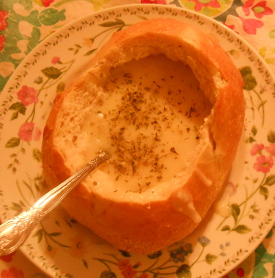
CREAMY GARLIC SOUP
(Krémová Cesnaková Polievka)

INGREDIENTScreamygarlicsoup

2 potatoes
4 cups water (1 more cup later)
¾ cup milk
1 cup water
5 garlic cloves
1 egg yolk
2 tablespoons butter
2½ tablespoons flour
½ teaspoon salt
2 large, hollowed round bread loaves
1 teaspoon parsley

SPECIAL UTENSIL

potato masher

Makes 2 large bread bowls.. Takes 1 hour.

PREPARATION

Peel potatoes. Cut each potato into four pieces. Add potato pieces and 4 cups water to large pot. Bring to boil using high heat for 20 minutes or until potato softens. Stir frequently. Remove from heat. Add milk and 1 cup water. Stir with spoon. Remove potato pieces from water. Leave water/milk in pot..

While water boils, mince garlic. Beat egg yolk in small cup. Melt butter in pan using low-medium heat. Add melted butter and flour to mixing bowl. Mix with whisk until blended. Add potato pieces. Mash potato pieces with potato masher. Mix potato, flour, and butter with fork until potatoes becomes creamy.

Add creamy mashed potatoes, garlic, egg yolk, and salt to pot with saved water. Bring to boil using high heat. Stir frequently. Reduce heat to warm and cook for 15 minutes or until everything is smooth. Stir frequently. Ladle soup into hollowed round bread loaves.. Garnish with parsley.

TIDBITS

1) It is virtually impossible to tell a volcano that has blown its from a creamy garlic soup bowl, but I shall try. Active volcanoes spew forth pumice and red-hot lava. Creamy garlic soup bowls have ingredients. Volcanoes are dangerous, often fatal. Soup bowls are tasty. You eat soup bowls with spoons. Lava is hot; you can’t eat it. Oh, and volcanoes are generally bigger than soup bowls. There.


– Paul De Lancey, The Comic Chef

My cookbook, Following Good Food Around the World, with its 180 wonderful recipes, my newest novel, Do Lutheran Hunks Eat Mushrooms, a hilarious apocalyptic thriller, and all my other books, are available on amazon.com.

Categories: cuisine, international | Tags: , , , , , , , , , , , , | 2 Comments

Toad in the Hole

British Entree

TOAD IN THE HOLE

INGREDIENTStoadinthehole

1 cup flour
¼ teaspoon mustard powder
½ teaspoon salt
2 tablespoons butter
3 eggs
1¼ cups milk
2 tablespoons vegetable oil (2 more tablespoons later)
2 pounds bangers or plain pork sausages or beef sausages
¼ teaspoon rosemary
¼ teaspoon thyme
2 tablespoons vegetable oil
1 onion
½ tablespoon brown sugar
¾ cup beef stock

SPECIAL UTENSIL

Combination 8″ x 12″ casserole dish & time machine (They’re handy!)

Serves 6. Takes 1 hour 15 minutes.

PREPARATION

Add flour, mustard powder, and salt to 1st mixing bowl. Blend with whisk. Melt butter. Add eggs to 2nd bowl. Beat eggs with whisk. Add melted butter and milk to eggs. Mix thoroughly with whisk. Add liquid contents of 2nd bowl to flour in 1st bowl. Blend with whisk until mixture becomes smooth bread pudding. Cover and let sit for 30 minutes.

While pudding sits, preheat oven to 400 degrees. Coat sides and bottom of casserole dish with 2 tablespoons vegetable oil. Put casserole dish in oven. Raise temperature to 425 degrees. When oven temperature reaches 425 degrees, remove casserole dish. Add sausages evenly to casserole dish. Bake at 425 degrees for 10 minutes or until sausages start to brown on all sides. You might need to turn them over at least once. (Be careful! Use oven mitts!) Remove casserole dish from oven. Pour bread budding over sausages. Sprinkle with rosemary and thyme. Put casserole dish back in oven. Bake at 425 degrees for 30 minutes or until toothpick stuck into batter comes out clean.

While batter bakes, mince onion. Add onion and 2 tablespoons vegetable oil to pan. Sauté at medium-high heat for 5 minutes or until onion softens. Stir frequently. Add brown sugar and beef stock. Simmer on low heat for 5 minutes. Stir occasionally. Ladle this beef stock/onion gravy over bread pudding and sausages in casserole dish.

TIDBITS

1) Sometimes it can be quite hard to track down every ingredient listed in a recipe, even when you think they should be easy to find.

2) In the case of this recipe, bangers were the items that were hard to track down. Impossible even. There’s a small discount supermarket (Small supermarket is a bit of contradiction, isn’t it?) that occasionally carries bangers, the British sausage. Occasionally. When it’s overstocked somewhere in San Diego County. How often does that happen? *Bangs head against wall*

3) Sorry for the delay in writing this tidbit, I had a headache from banging my head against the wall.

4) But wait, there was no delay for you, was there? It’s kinda like having your own time-travel machine.

5) Anyway, if you can’t find bangers nearby, try and get plain pork sausages. If your supermarkets don’t have such things, try and get beef sausages.

6) Don’t settle for tiny breakfast sausages. Just don’t. The sausages will settle under this dish’s bread pudding. Your guests will make remarks that while meant to be witty, will come across as being ungrateful and mean. You will race to your closet to get your saber. All sorts of boxes full of stuff you don’t even remember will fall on your head. Your headache will come roaring back as if The HulkTM himself is squeezing your skull. You will be in no mood to see reason. You will skewer all your guests, dispatching them with a hearty “Take that” or “Ho, ho.”

7) The law will take a dim view of such stuff. No, not the screaming of “Take that” or “Ho, ho,” rather the offing of your diners. It bears repeating, police don’t like premeditated murder or even manslaughter in this case. On the other hand, they’re remarkably tolerant of what you say while killing someone. They know if you’re so disturbed as to end someone’s life, you’re not going to be at your literary best. To save yourself embarrassment, may I suggest picking up a copy of 101 Clever Things to Say While Murdering?

8) So murder is out. You will need to create your own bangers. A banger is 65% pork sausage, 30% tusk (dried bread), and 5% seasonings. Simply, take your Bushnell 457 Sausage InjectorTM and fill it with a mixture of 5 parts dried bread to 1 part seasonings. Then inject the tusk/seasoning mix into the plain pork sausage until the ratio of pork sausage to mix is 13 to 7.

9) It does take practice to get the pork sausage/seasoning mix proportion just right. It takes even more practice to inject a lot of mixture into a sausage that already fills in casing completely. In fact, you’re almost certain to explode the sausage, causing you to fly into a rage, fly to your closet to get that saber again, and dispatch the first guest who even comes into your kitchen. That would be bad, run-on sentences like this are horrible.

10) Oh and Bushnell 457 Sausage Injectors are truly hard to find. The company stop making them in 2014. Which is why you simply must have a Bushnell 323 Combination Casserole Dish & Time MachineTM. Simply go back to a time when your local discount supermarket carried bangers. Then use that same gizmo to bake this entree. See? Life is good after all. Thank you, Bushnell.

– Paul De Lancey, The Comic Chef

My cookbook, Following Good Food Around the World, with its 180 wonderful recipes, my newest novel, Do Lutheran Hunks Eat Mushrooms, a hilarious apocalyptic thriller, and all my other books, are available on amazon.com.

Categories: cuisine, international | Tags: , , , , , , , , , , , , , , , , , | Leave a comment

Create a free website or blog at WordPress.com.