
Martinican Dessert
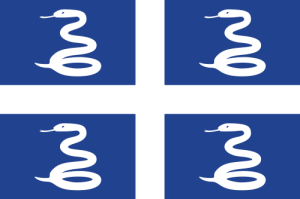
(From Martinique)
BANANE CELESTE
INGREDIENTS
1 pound cream cheese (½ pound more later)
3 tablespoons butter
6 ripe bananas
¼ cup brown sugar
½ teaspoon cinnamon (¼ teaspoon more later)
½ pound cream cheese
¼ cup heavy cream
¼ teaspoon cinnamon
SPECIAL UTENSIL
8″ *8″ baking dish
Serves 6. Takes 50 minutes plus at least 2 hours 30 minutes to set.
PREPARATION
Preheat oven to 350 degrees. Let cream cheese and butter soften. Peel bananas and cut them in half along their lengths.
Add cream cheese, brown sugar, and ½ teaspoon cinnamon to large mixing bowl. Use fork or blender on lowest setting until cream cheese/brown sugar mixture is light and fluffy.
Light and fluffy sounds so peaceful doesn’t it? Next time you’re at a peace conference say, “Light and fluffy” to the warring sides and see if the mood of the room doesn’t improve dramatically.
Meanwhile back at the stove, use medium heat to melt the butter in a pan. Add 6 banana halves to pan. Sauté bananas on medium heat for 5 minutes or until they turn light brown on both sides. Turn bananas carefully over once with spatula to ensure even browning. Repeat for second batch of 6 banana halves.
Evenly arrange 6 banana halves in bottom of baking dish. Spoon cream cheese/brown sugar mixture evenly over bananas. Place 6 more banana halves on top of the cream cheese. Spoon ½ pound cream cheese atop the second banana layer.
Smooth heavy cream over the second layer of cream cheese. Sprinkle ¼ teaspoon cinnamon over heavy cream.
Bake for 20 minutes at 350 degrees or until cream-cheese sauce is bubbly and golden brown. Let cool on wire rack for 30 minutes. Put in refrigerator at least 2 hours or until it sets.
TIDBITS
1) Josephine Bonaparte, wife of the Emperor Napoleon, was born in Martinique in 1763 with the name of Marie Josèphe Rose Tascher de La Pagerie. This name was way too long so most people just called her “Ma.” Josephine possessed a lively sense of humor.
2) People loved her jokes. She had them in stitches. Agents from Vau de Ville frequently came to her mansion to sign her up for large engagements but she always demurred, saying she was but a simple banana plantation monopolist.
3) Still the island’s elite kept coming to her comedy soirées to hear her jokes. They never wanted to leave even when she got tired and wanted to retire. They’d say, “Yo, Ma, Ma, tell us another joke.”
4) Her funnies became known as “Ma Ma jests,” then “Mama jests,” and finally by 1779 as “Yo, Mama jokes.”
5) In 1779, Ma Pagerie married the owner of the Folies Bergère, Monsieur de Beauharnais, and moved to Paris.
6) Nothing much of note happened in the lives of the de Beauharnaises until monsieur ended their marriage by getting guillotined in 1794. Saved the unpleasantness of a bitter divorce, Ma commenced a series of mirthful affairs with the handsome leaders of the French Revolution.
7) In 1796 she attracted the eye of a young artillery officer named Napoleon Bonaparte. “She made me laugh,” said Napoleon before his death.
8) Napoleon suffered from chronic depression and often stayed in bed neglecting to fight the smallest battle until Ma bucked him up with one of the world’s first chicken-crossing the road jokes. “Pourquoi le poulet a traversé la rue? Pour obtenir à l’autre côté.”
9) Ma’s merriment gave Napoleon the energy to follow his dream. In 1799, he and two other hombres overthrew the constitutional government. In 1804, he reached the top of the government ladder when he made himself emperor.
10) Life was good for France with Napoleon conquering one country after another. People no longer had to get visas to visit the Italian Riviera. Napoleon had made it part of France. What a guy!
11) But things went sour in 1810. Napoleon wanted an heir for his Empire. Ma, although always able to conceive a knee-slapping joke without a moment’s notice, could not do the same with a child. So Napoleon divorced her and married Marie Louise of Austria.
12) Marie Louise lived in a permanent humor-free zone. She never made Napoleon laugh, not once. Napoleon grew moody, his judgment became impaired. In 1812, he invaded Russia, a disaster. By 1814, his enemies camped at the French border. They offered Napoleon a peace treaty, but without Ma’s jokes to relieve the tension caused by his tactless outbursts, negotiations went downhill.
13) Napoleon was forever defeated in 1815 and exiled to St. Helena. It would decades before vaudeville revived.
– Paul De Lancey, The Comic Chef, Ph.D.
My cookbook, Following Good Food Around the World, with its 180 wonderful recipes, my newest novel, Do Lutheran Hunks Eat Mushrooms, a hilarious apocalyptic thriller, and all my other books, are available on amazon.com.










 Paul De Lancey's Blog